

Third Time Could Be a Charm: Ghana’s Constitution Review Committee’s Plan to Fix Governance Deficits
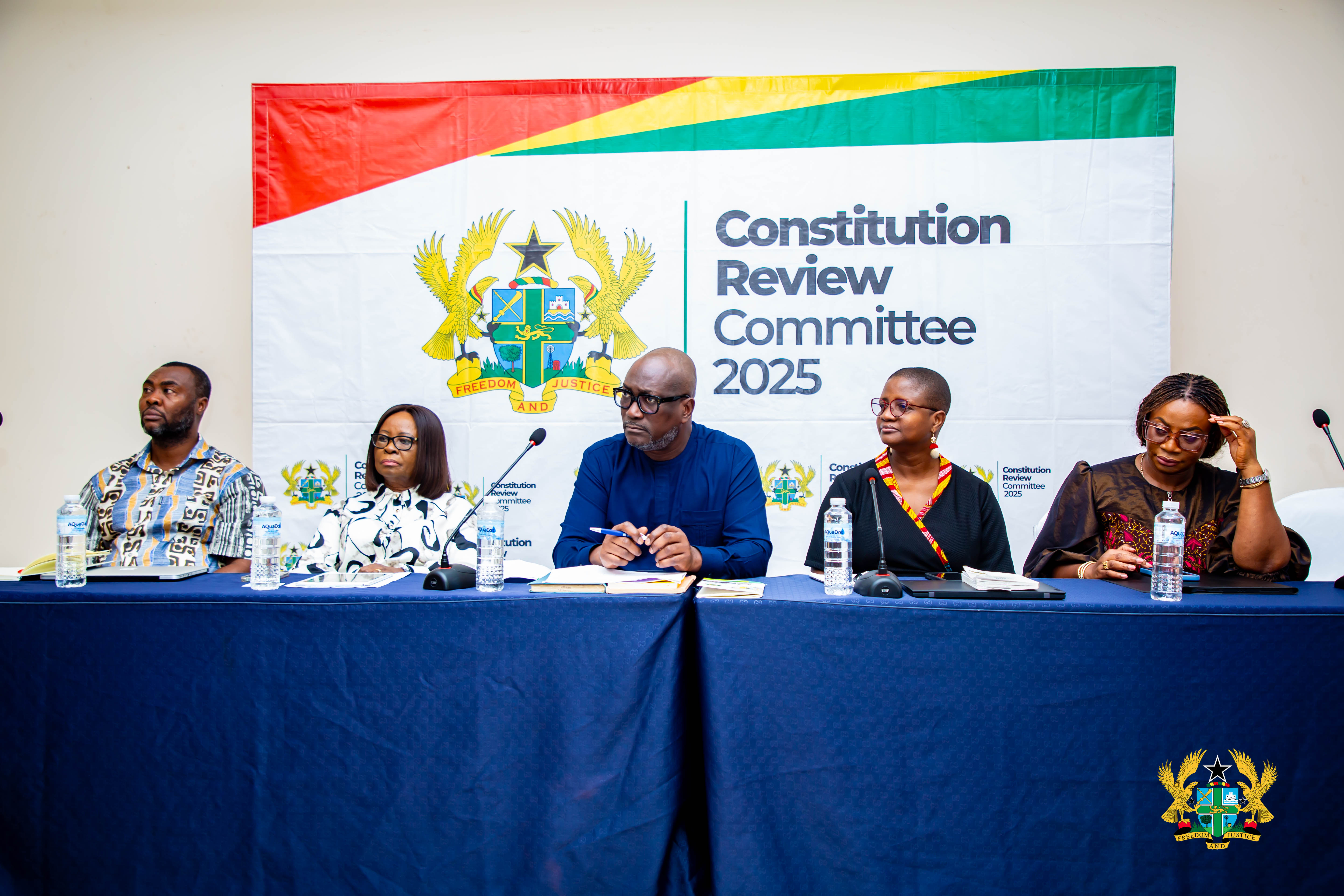
On 22 December 2025, Ghana’s Constitution Review Committee submitted its final report to President John Mahama after nearly a year of nationwide consultations on the operation of the 1992 Constitution. Nicholas Opoku examines the Committee’s core recommendations and the political and procedural hurdles that will shape whether this third attempt at constitutional reform becomes a turning point—or another missed opportunity.
On 22 December 2025, after nearly a year of nationwide consultations, the Constitution Review Committee of Ghana (“the Committee”), established by President John Mahama, submitted its final recommendations. Titled “Transforming Ghana: From Electoral Democracy to Developmental Democracy,” the report addresses perennial governance challenges of the 1992 Constitution, offering proposals that aim to strengthen checks and balances and realign governance with development priorities.
Ghana has maintained a relatively stable electoral democracy since the promulgation of the 1992 Constitution. Developments over the past several years have, however, increasingly exposed defects in its constitutional framework. Key developments include the death of a sitting President in 2012 which preceded a highly contested presidential election that culminated in a landmark Supreme Court ruling in 2013; subsequent disputed presidential election results adjudicated by the Court in 2020; and the emergence of a “hung” Parliament in 2021, reflecting increasing electoral competitiveness and legislative fragmentation.
Furthermore, the removal of heads of independent constitutional bodies including Electoral Commissioners in 2018, the Auditor General in 2021, and the Chief Justice in 2025, have raised questions about institutional independence. Although some removals were constitutional, the surrounding political context suggests they may have been pursued in bad faith as a political score-settling measure rather than an impartial enforcement of constitutional norms.
Attempts to amend the Constitution, including the stalled 2010 constitutional review and the aborted 2019 amendment, also revealed the challenges of achieving bipartisan consensus for constitutional reform. Further, fiscal indiscipline and mounting socio-economic pressures culminating in Ghana’s first sovereign debt default in 2022, and repeated recourse to the International Monetary Fund (IMF) have underscored the need to tighten constitutional loopholes on public finance, and to avert the political instability afflicting the subregion.
In this context, this piece highlights some of the Committee’s key recommendations to address Ghana’s governance shortcomings and reflects on implementation challenges and next steps.
Addressing an Imperial Presidency
A persistent weakness identified in Ghana’s past reform attempts is the President’s expansive appointment powers across the public service, institutions of horizontal accountability, and state owned enterprises (SOEs), entrenching patronage and undermining checks and balances. To address this, the Committee recommends calibrating presidential appointment discretion to the level of independence required by each office and accordingly recommends classifying constitutional appointments into four categories: “executive”, “independent”, “hybrid-independent”, and “hybrid-executive”. Under this proposal, presidential discretion in appointments would be limited to core executive offices, particularly within law enforcement and roles under parliamentary oversight (e.g. Ministers, Presidential advisers, and support staff).
For appointments to independent offices (including Electoral Commissioners, the Auditor General, and the Chief Justice), the Committee recommends that the President acts in accordance with nomination(s) submitted by an independent constitutional body following a competitive and merit-based selection process. To do so, the Committee proposes a substantially reformed Council of State as the primary nominating body, with a reformed Judicial Council responsible for specified judicial appointments. Fixed renewable or non-renewable terms for independent offices are recommended to safeguard institutional autonomy. Additionally, the proposed removal process for heads of independent constitutional bodies would limit presidential involvement to shield it from perceptions of political interference and vest this responsibility in a reformed Council of State.
For appointments to hybrid-independent offices, including SOEs leadership, the President would act on the advice of the relevant nominating body or governing council such as the State Interests and Governance Authority (SIGA) following an independently administered, merit-based selection process.
Finally, for appointments to hybrid-executive offices, the President would act in consultation with the relevant oversight body such as the Police Council in the case of the Inspector General of Police (IGP) or the Armed Forces Council in the case of the Chief of Defence Staff, through an informed process that considers candidates’ qualifications. The Committee reasons this will impose both procedural and substantive constraints on presidential discretion.
To prevent last-minute executive decisions with ripple effects, the Committee also recommends strict limitations on the powers of a lame-duck president (and his appointees) during the transition period, including prohibitions on appointments or offers of public employment extending into the next administration; the introduction of legislation under a certificate of emergency (strictly limited under the proposals); and the granting of new contracts not already approved.
The Committee further recommends lowering the minimum presidential age from 40 to 30 to reflect demographic trends and empower the youth as key political stakeholders. It also proposes taxing presidential salaries and allowances and limiting post-office immunity for civil and criminal cases.
Presidential Term: Extension to 5 years?
The Committee reviewed whether Ghana’s four-year presidential term is too short, noting concerns that a President effectively governs for just over two years, spending the initial months on appointments and the final year on campaigning. Guided by comparative best practices, the Committee recommends extending the presidential and parliamentary terms to five years, while retaining the presidential two-term limit.
According to the Committee, a five-year term aligns with African and global norms, allows sufficient time for policy implementation, strengthens electoral accountability, and synchronizes the political cycle with national development planning. The proposal has already sparked public debate in Ghana, with critics arguing that the issue is managerial and could be addressed without constitutional change.
Strengthening Parliamentary Oversight
The constitutional requirement that a majority of ministers be appointed from among Members of Parliament (MPs) has long undermined legislative oversight of the executive. To address this, the Committee recommends barring MPs from serving as ministers, deputy ministers, or regional ministers, and capping Parliament to 276 members. In addition, secret votes in Parliament would be limited to the election or removal of “any person under this Constitution or under any other law”, while votes on constitutional amendments would be open and recorded. MPs would also be barred from holding positions in state-funded entities or accepting significant gifts.
Judicial Independence
The absence of a ceiling on the number of Supreme Court judges has been criticized for compromising the institutional and decisional independence of the court and its members. The Committee therefore proposes limiting the Supreme Court to a Chief Justice plus 14 justices and establishing merit-based and transparent appointment procedures. Under the proposals, the Chief Justice would serve a single non-renewable term of 10 years or until age 70. All superior court justices would hold office until retirement, death, or resignation, with mandatory retirement ages of 70 for the Supreme Court and Court of Appeal, and 65 for the High Court.
To unclog the Supreme Court’s docket, enhance the timeliness of its decisions, and allow it to focus on substantial constitutional matters, the Committee recommends retaining the Supreme Court’s jurisdiction but streamlining its appellate workload by requiring lower court appeals to end at the Court of Appeal, except by leave.
Anti-Corruption
To strengthen the investigation and prosecution of corruption and related offences, the Committee proposes removing the Attorney-General’s power to prosecute and the Commission on Human Rights and Administrative Justice’s power to investigate such cases, instead vesting these authorities in a new Anti-Corruption and Ethics Commission (AEC). The AEC would replace the Office of the Special Prosecutor, which has faced growing political pressure, including a constitutional challenge to the propriety of its establishing statute.
An Independent Registrar and Regulator of Political Parties and Campaigns is also proposed to regulate political parties and campaign financing, a major channel for public sector corruption.
Emoluments of President and Public Officials
Emoluments for public officials have long been criticized as fiscally reckless, inequitable, and a symbol of elite entitlement. To address these concerns, the Committee proposes replacing the current ad hoc approach to determining public sector emoluments and parliamentary gratuities with an Independent Public Emoluments Commission, selected by the reformed Council of State in accordance with legislation, which would be responsible for determining the salaries, allowances, privileges, and facilities of public officers.
Corporate Governance of State-Owned Enterprises
To tackle the underperformance of SOEs and state-controlled joint ventures, often driven by political patronage, the Committee recommends establishing the existing State Interests and Governance Authority (SIGA) as a constitutional “super-board” to oversee commercial SOEs and joint ventures. Under the proposals, Ministers, deputies, and MPs would be prohibited from serving on boards or management of SOEs. Appointments would be merit-based, transparent and grounded in sound corporate principles.
The Committee also recommends that Parliament enact a single law providing a uniform governance framework for all SOEs and state-controlled joint ventures, irrespective of their mode of incorporation. Under such law, SOEs shall be subject to enhanced financial reporting and disclosure requirements for liabilities and fiscal risks.
Fiscal Discipline and Transparency
To curb executive overreach and limit leakages in public finance, the Committee recommends classifying all tax exemptions, waivers, and concessions as tax expenditures, with annual ceilings approved by Parliament. The Committee also recommends requiring the Bank of Ghana to act on written directives from the Minister of Finance only when authorized by law and approved by at least 60% of Parliament, and to quarterly report on foreign exchange transactions to Parliament’s finance committee. The proposals also limit the total number of Ministers of State, including Deputy Ministers and Regional Ministers to 57 to prevent executive bloat and cut expenditure.
Implementation Hurdles and Amendment Procedure
The Committee’s proposals constitute a holistic effort to remedy long-standing structural governance deficits that have constrained Ghana’s democratic consolidation and developmental outcomes. Their implementation, however, will depend heavily on bipartisan political support and broad public acceptance, given the onerous nature of Ghana’s constitutional amendment process.
Provisions on fundamental human rights, the executive, the legislature, the judiciary, local government, and constitutional amendment are entrenched. Many of the Committee’s core recommendations implicate these entrenched provisions, triggering the constitutional requirement of approval by referendum with high voter participation thresholds. Securing such approval would require sustained inter-party negotiations and extensive public mobilization, including the support of influential civil society organizations and traditional authorities. Here, the extensive nationwide consultations conducted by the Committee with a broad range of stakeholders would prove helpful.
By contrast, amendments to non-entrenched provisions, which do not require a referendum, have a comparatively higher prospect of passage, given the ruling party’s—the National Democratic Congress (NDC)—parliamentary supermajority. Nonetheless, passage is not assured. Under the current constitutional framework, Members of Parliament vote on constitutional amendments by secret ballot, limiting the effectiveness of party whips. Moreover, while President Mahama has publicly championed the reform agenda, the process may extend over several months, and there is little indication that Mahama’s potential successors within the NDC are equally incentivized to sustain the reform momentum. Mahama may, therefore, be inclined to prioritize the implementation of select key amendments before the 2028 election campaign cycle, thereby reinforcing public confidence in the reform process moving forward.
Implementation will also hinge on Parliament’s willingness to act as the principal conduit for reform. This may prove challenging, as several recommendations directly curtail parliamentary privileges, including proposals to bar MPs from serving in the executive or SOE management and to rationalize salaries and emoluments. In addition, political parties, civil society actors, and professional associations are likely to diverge on reform sequencing and prioritization, further complicating consensus-building.
To address these constraints, the Committee proposes amending Chapter 25 of the Constitution to add a third category of “semi-entrenched” provisions, resolving a longstanding problem in the amendment process. These would encompass certain non-foundational provisions currently amendable only through a referendum, which could instead be amended by an enhanced parliamentary majority of not less than 75% of all MPs.
The Committee further recommends extending the “semi-entrenched” classification to provisions such as those relating to some fundamental human rights and the removal of heads of independent constitutional bodies, subjecting them to the same enhanced parliamentary threshold. Only provisions forming part of the Constitution’s “basic structure” or core democratic safeguards (e.g. presidential term) would remain fully entrenched and amendable exclusively by referendum. All remaining provisions would continue to be amended as non-entrenched provisions, in accordance with the existing two-thirds parliamentary approval requirement.
Finally, the Committee recommends the insertion of a new Article establishing a citizen-initiated constitutional amendment mechanism, allowing citizens to propose amendments upon securing the endorsement of not less than five percent of registered voters nationwide, with signatures collected either physically or through a verified digital system.
Conclusion
Ghanaians are aware that there will never be a perfect time for constitutional reform and this opportunity cannot be missed given the political momentum, the current composition of Parliament and the civil society groups driving the reform agenda.
With the 2028 general elections approaching, securing bipartisan and public support will grow harder the longer the process drags, making swift action essential. President Mahama has pledged to establish an Implementation Committee, drawing members from the existing Committee, to guide the process. The inclusion of opposition members on the Committee could signal a step toward consensus building. The process would likely proceed with the Attorney-General presenting draft amendment bills to Parliament, followed by Council of State review, setting the stage for high-stakes negotiations and strategic manoeuvring between the government, opposition, and civic groups.
About the Author
Nicholas Opoku is a Ghanaian lawyer experienced in strategic litigation, constitutional and legislative reform. He has consulted for multilateral and civil society organizations, and in 2025, assisted the Ghana Constitution Review Committee with submission analysis, comparative research and drafting of its final report.
Suggested Citation
Nicholas Opoku, ‘Third Time Could Be a Charm: Ghana’s Constitution Review Committee’s Plan to Fix Governance Deficits’, ConstitutionNet, International IDEA, 14 January 2025, https://constitutionnet.org/news/voices/third-time-could-be-charm-ghanas-constitution-review-committees-plan-fix-governance-deficits
Further Reading
- Updates on constitutional developments in Ghana.
- International IDEA, Primers on Constitution-Building.
Contribute to Voices from the Field
If you are interested in contributing a Voices from the Field piece on constitutional change in your country, please contact us at constitutionnet@idea.int.