

Algeria’s “Technical” Constitutional Reform: Between Closing Procedural Gaps and Recalibrating Institutional Balances
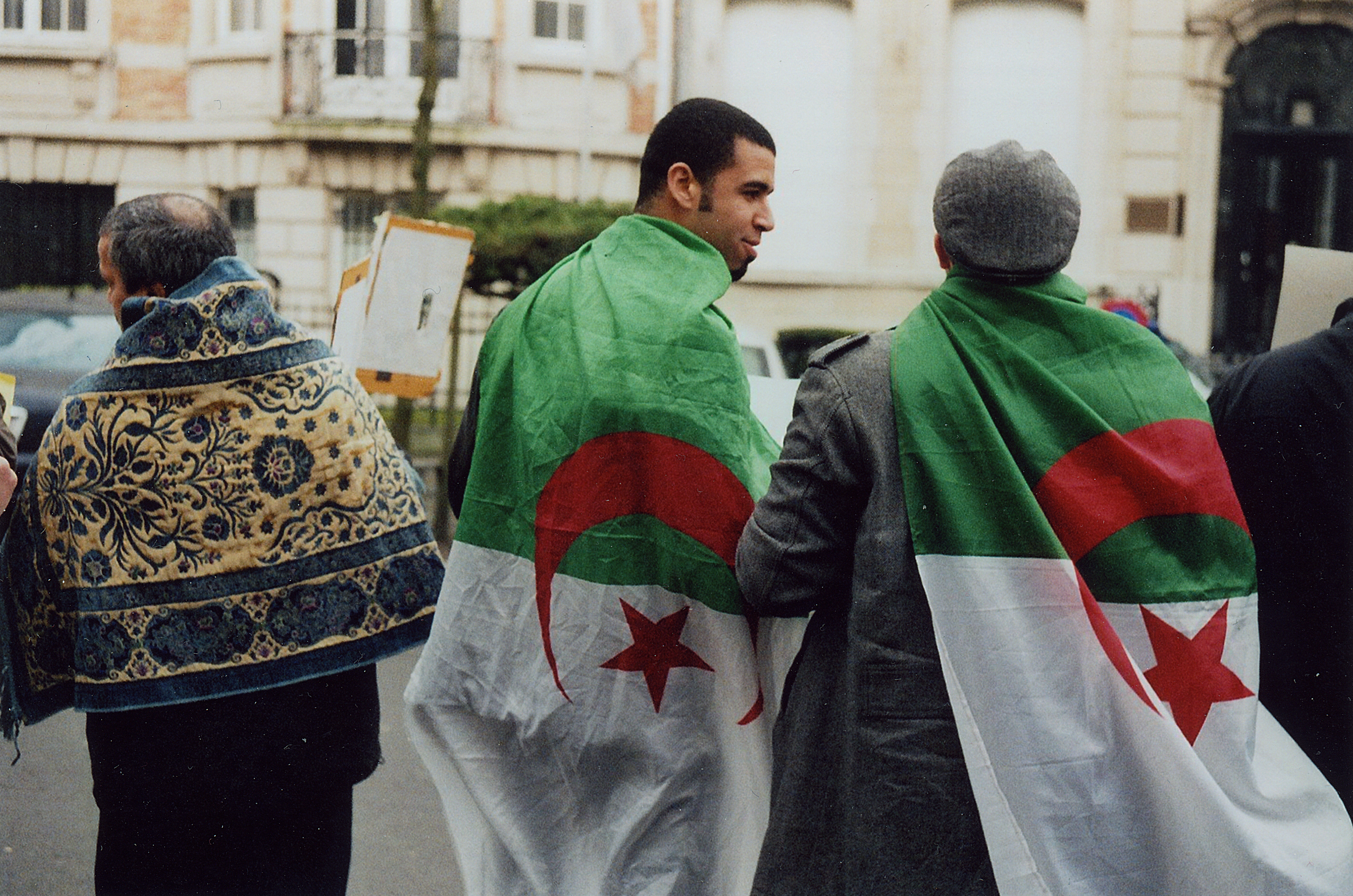
In March 2026, Algeria adopted a set of constitutional amendments officially framed as “technical” and aimed at refining the operation of the 2020 Constitution. Yet the breadth of the changes—affecting executive authority, parliamentary procedure, judicial governance, and electoral oversight—raises a more substantive question. Beyond closing procedural gaps, the reform recalibrates how power is organized and exercised across key institutions. It is not merely a clarification exercise, but a targeted adjustment of the system’s internal balance, one that preserves its core architecture while expanding the executive’s room for manoeuvre and reshaping the mechanisms of institutional control—writes Pr. Dr. Amar Rouabhi.
In March 2026, Algeria’s Parliament, meeting in joint session, adopted a package of constitutional amendments officially described as “technical,” later promulgated as Law No. 26-04 on constitutional revision. The reform was presented in official communications as a practical response to shortcomings revealed during the implementation of the 2020 Constitution and as a means of improving institutional functioning by filling procedural gaps. Yet the description of the reform as merely “technical” is insufficient.
The revised provisions concern sensitive areas of institutional life: the exercise of executive power, the settlement of disagreements between the two chambers of Parliament, the organization of the High Council of the Judiciary, and the relationship between the National Independent Authority for Elections and the administration. The main question, therefore, is not whether the reform is technical, but whether it reshapes the rules through which power is produced, managed, and constrained. Procedural amendments may still have substantial political consequences when they alter the operating mechanisms of institutions.
Constitutional and Political Context
The 2026 reform fits within an established Algerian constitutional pattern in which revisions have generally taken the form of selective adjustments within an institutional framework that seeks to preserve continuity, even when stemming from contexts marked at times by political rupture. The 2020 Constitution itself emerged in the aftermath of the 2019 protests (Hirak). It sought to reconcile the language of reform with institutional continuity. However, the constitution-making process was marked by low turnout and partial boycott, reflecting limited consensus around the reform. It promised political and institutional change without severing the deeper logic of the system.
The 2026 reform follows that approach. It does not affect entrenched principles, the republican form of the state, the constitutional identity of the regime, or presidential term limits. Instead, it amends provisions that, although operational in nature, have concrete effects on everyday political practice. It is best understood, therefore, not as a founding constitutional moment but as an attempt to make the existing system more efficient and recalibrate the balance between executive authority, legislative processes, and institutional oversight. This reform was also informed by the experience of implementing the 2020 Constitution, which exposed ambiguities and practical gaps in certain provisions. It should thus be read not only as a clarification exercise, but as part of a broader logic of incremental institutional engineering.
Amendment Procedure: Formal Legitimacy and Limited Participation
The reform was adopted in accordance with the constitutional amendment procedure set out in Article 232 of the 2020 Constitution. Under this provision, where the Constitutional Court issues a reasoned opinion confirming that a proposed amendment does not infringe the fundamental principles governing Algerian society, fundamental rights and freedoms, or the institutional balance of powers, the amendment may be promulgated without a referendum. In such cases, the text must first be approved by a three-quarters majority of the members of both Chambers of Parliament. Following this procedure, the reform obtained the favourable opinion of the Constitutional Court and the requisite parliamentary approval and was subsequently promulgated and published in the Official Gazette as Law No. 26-04 of 26 March 2026.
The choice of the parliamentary route rather than the referendum confirms that the authorities framed the revision as technical rather than based on principles. This reading is reinforced by the institutional configuration of Parliament, which has often been characterized by a majority broadly aligned with the executive. In fact, Parliament in Algeria is composed of two chambers—the National People’s Assembly and the Council of the Nation—and operates within a political context shaped by the post-2019 transition, marked by relatively low electoral participation and ongoing debates over representation following the Hirak movement. Yet formal constitutional legitimacy does not eliminate political debate. When revision concerns sensitive sites in the management of power, proceeding exclusively through Parliament may leave open the question of whether such legitimacy is politically sufficient.
Substance of the Amendments: Specific Additions Rather Than Broad Overhaul
The 2026 reform is not a broad rewriting of the Constitution; rather it consists of targeted additions and adjustments. The following sections focus on selected amendments that illustrate the main directions of the reform, rather than providing an exhaustive account of all changes.
Executive Power: Clearer Organization, Restricted Delegation
Article 91 preserves the general structure of presidential powers, but explicitly includes the possibility of calling early presidential, legislative, or local elections. This gives the presidency a clearer constitutional tool for shaping the timing of the political cycle.
Article 93 allows the President to delegate some powers to the Prime Minister or Head of Government but also sets strict limits on what may not be delegated. Non-delegable powers include appointing the Prime Minister or Head of Government and cabinet members, appointing heads and members of constitutional institutions where no other method is provided, recourse to referendum, dissolution of the National People’s Assembly, and the calling of elections before term, among others.
The logic is clear: operational flexibility without dispersing core authority. The reform improves executive manageability while preserving concentrated presidential authority.
The Council of the Nation: A Shift in Representation Logic
One of the most important changes appears in Article 121. Under the 2020 Constitution, representation in the Council of the Nation was based on a fixed allocation of two seats per province (wilaya), elected indirectly by members of municipal and wilaya assemblies, with the remaining third appointed by the President. The 2026 reform modifies this arrangement by providing for one or two seats per wilaya depending on population size, a change that must be understood in light of the expansion of the territorial framework—from 58 to 69 wilayas—which placed structural pressure on the existing model of representation.
While this adjustment introduces a limited demographic criterion, it does not establish full proportional representation. The electoral mechanism remains indirect, and the presidential appointment of one-third of the members is maintained. The reform therefore reflects a hybrid model: it preserves the territorial basis of representation while introducing a controlled demographic correction.
Relatedly, Article 134 now requires that the President of the Council of the Nation also meet the eligibility requirements for the Head of State, raising the constitutional threshold for leading the upper chamber.
Articles 224 and 226 address the consequences of changes in wilaya representation in the Council of the Nation. Article 224 allows members elected from wilayas whose representation has changed to remain in office until the next half-renewal, while Article 226 regulates newly created wilayas, providing for the renewal by lot of halves of the elected members of the Council of the Nation, excluding its President, and their replacement according to the same electoral procedures.
Parliamentary Time and Legislative Deadlock
Article 138 now allows the Prime Minister or Head of Government to request an extension of Parliament’s ordinary session, providing the executive with greater room to align legislative time with political and institutional demands.
More significant is Article 145. Under the 2020 Constitution, if disagreement between the two chambers persisted, the government could only request the National People’s Assembly to decide definitively. The 2026 reform introduces a more flexible mechanism. In cases of continued disagreement, the government may request that the matter be settled definitively either by the National People’s Assembly or by the Council of the Nation, as the case may be. From a comparative perspective, assigning such a role to the executive remains relatively unusual, as legislative deadlock is typically resolved through internal parliamentary mechanisms.
However, the amendment does not amount to a substantive executive intervention in law-making. The process remains primarily anchored within the legislature, notably through recourse to a joint committee composed of members of both chambers. Even where this committee fails to reach agreement, the adoption of the version last approved by one of the chambers—based on a temporal criterion—confirms that the final reference remains the legislative act itself.
While the amendment grants the executive the ability to request that one chamber take the final decision, this constitutes a form of procedurally constrained choice rather than unrestricted power. It is best understood as a mechanism for managing legislative deadlock rather than shaping its substantive outcome.
The High Council of the Judiciary
Articles 180 and 181 restructure the High Council of the Judiciary. The President of the Republic remains its chair, though the First President of the Supreme Court may preside by delegation. Its composition is not merely broadened but reconfigured. In addition to elected judges from multiple judicial bodies, the amendment introduces the Public Prosecutor at the Supreme Court and six members from outside the judiciary—two appointed by the President of the Republic, two by the President of the National People’s Assembly, and two by the President of the Council of the Nation. At the same time, it removes certain actors, notably representatives from the judicial trade union structure and the President of the National Council for Human Rights.
Article 181 further clarifies that appointments to specialized judicial posts are made by presidential decree after consultation with the Council, and that the Council oversees compliance with the judicial statute and judicial discipline.
The amendment therefore combines an internal restructuring of judicial representation with the preservation of presidential centrality. It does not establish judicial independence detached from executive influence but rather consolidates a model of institutionally framed independence within a clear presidential architecture.
Electoral Governance: Independent Authority, Administrative Backbone
Article 202 is among the most revealing provisions. The National Independent Authority for Elections retains responsibility for preparing, organizing, managing, supervising, and overseeing elections and referendums. The amendment also extends the period during which it exercises its authority until the announcement of provisional or final results, as the case may be. At the same time, the text expressly provides that the administration shall ensure the material preparation of electoral and referendum operations.
The amendment thus maintains the formal breadth of the Authority’s mandate while introducing a significant structural shift through the explicit assignment of material preparation to the administration. This does not reduce the Authority to a purely consultative role, but it does reconfigure the distribution of functions within the electoral process. By separating normative and supervisory functions from logistical and material control, the amendment effectively reinserts the administration into the core of electoral operations.
In that sense, rather than a formal downgrading, the reform reflects a functional rebalancing: it preserves institutional oversight while relocating key aspects of operational control within the state apparatus. In practice, this suggests that effective control remains partially embedded within the administration, even as supervisory authority is formally maintained by an independent body.
Political Reactions
There were varying reactions to the amendments. The Rally for Culture and Democracy (RCD) argued that what was presented as a technical reform in fact concealed a major political reorientation. In its view, the amendments allow the executive to recover stronger control over key institutional levers, especially elections and the judiciary, thereby reinforcing a form of hyper-presidentialism.
The Socialist Forces Front (FFS) does not appear to have articulated as categorical a substantive rejection as the RCD. The available evidence suggests reservations about the political and procedural path of adoption and a preference for broader national debate and consensus. Reports indicating that FFS parliamentarians boycotted the voting session point to opposition to the method of adoption and the surrounding context rather than a fully documented rejection of every revised provision.
The Movement of Society for Peace (MSP) adopted a more nuanced stance. It did not oppose the reform in principle but conditioned its support on the political content and direction of the reform. According to its leader, Abdelali Hassani Cherif, the movement supports any constitutional amendment grounded in the consolidation of freedoms, democracy, reform, and political stability. It therefore viewed the initiative as a possible avenue toward deeper political reform in the national interest rather than as a merely formal adjustment. At the same time, reports indicated that the party’s parliamentary bloc voted in favour of the reform despite not being fully convinced by it, revealing a conditional and pragmatic position that distinguishes between acceptance of constitutional revision as such and reservations about its scope and effects.
Conclusion
As reflected in this analysis, the deeper disagreement surrounding the 2026 reform concerns not only the text itself, but the way it reshapes the institutional order. It does not represent a foundational constitutional transformation or a mere cosmetic or linguistic revision, but rather a selective reform of the Algerian political system operating structure.
Considered together, these changes reveal a discernible structural trajectory. The reform preserves a concentrated executive authority, reshapes representation in the Council of the Nation, introduces a more flexible mechanism for resolving bicameral deadlock, reconfigures the composition of the High Council of the Judiciary, and entrenches a dual electoral model in which an independent authority coexists with continued administrative control over the material infrastructure of elections.
In that sense, the reform does more than close procedural gaps. It alters the relationship between the executive and other institutions, expands the executive’s room for manoeuvre in legislative coordination, preserves presidential authority within the judicial governance structure, and limits the extent to which electoral administration is detached from the state apparatus. The cumulative effect is not a change in the formal identity of the regime, but a recalibration of how authority is exercised within it.
Therefore, describing the reform as simply “technical” is ultimately inadequate. It is more accurately a reform of management and institutional regulation: one that leaves the major constitutional markers of the system intact, while reorganizing some of the practical channels through which power is produced, mediated, and constrained. Its long-term effects will depend on implementing texts and institutional practice, but its structural implications are already visible through the constitutional choices made.
About the Author
Pr. Dr. Amar Rouabhi is an Associate Professor at the Faculty of Law and Political Science, University of Boumerdes, Algeria. He is also an expert and international consultant in the field of international law.
Suggested Citation
Amar Rouabhi, ‘Algeria’s “Technical” Constitutional Reform: Between Closing Procedural Gaps and Recalibrating Institutional Balances', ConstitutionNet, International IDEA, 7 May 2026, https://constitutionnet.org/news/voices/algeria-reform-closing-procedural-gaps-recalibrating-institutional-balances
Further Reading
- Updates on constitutional developments in Algeria.
- Zaid Al-Ali, Algeria’s not-so-new (Draft) Constitution: Betraying Hirak’s radicalism? (2020).
Contribute to Voices from the Field
If you are interested in contributing a Voices from the Field piece on constitutional change in your country, please contact us at constitutionnet@idea.int.