

Temporary fixes and long-term commitments: Hungary’s 17th Amendment to the Fundamental Law
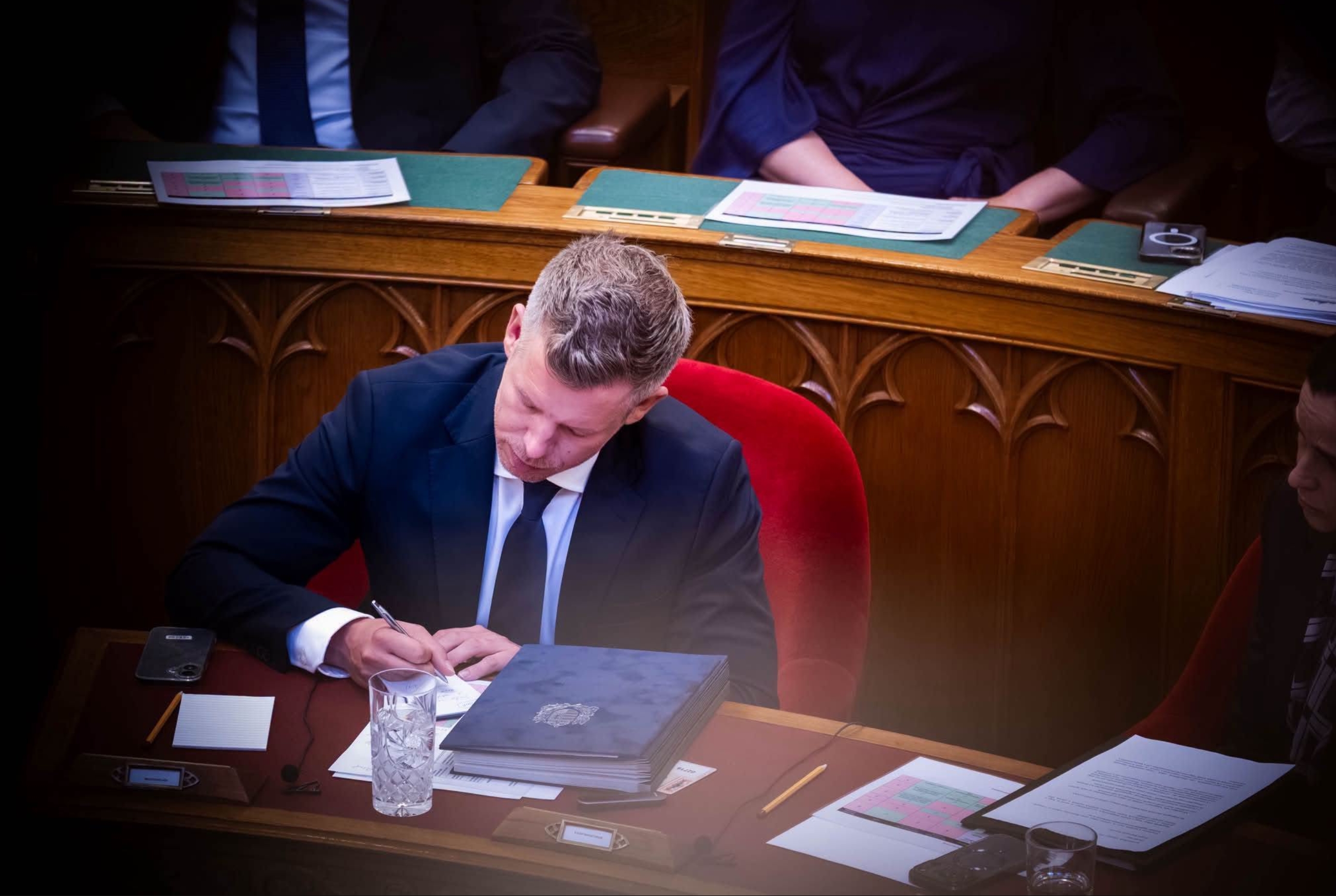
As Hungary’s new government moves to dismantle the constitutional architecture of the Orbán era, its transitional reforms expose the tensions between swift democratic restoration and the demands of constitutional legitimacy. Assessing the 17th Amendment to the Fundamental Law, Flóra Fazekas, András Kádár, and Nóra Novoszádek argue that while some changes are necessary and welcome, others may prove counterproductive to the restoration of the rule of law. They also stress the need for a genuinely inclusive and democratic constitution-making process.
National elections in Hungary in April 2026 resulted in the victory of a new opposition force, the TISZA party, ending the 16-year rule of Fidesz. TISZA secured a two-thirds majority in Parliament, enabling it to amend Hungary’s 2011 constitution or adopt a new one. Adopting a new constitution has been a recurring theme for TISZA as part of its commitment to restoring the rule of law: the party stated in its programme that it would draft a new constitution that would “reunite the nation” and repeated this commitment both before and after election day.
Hungary’s Fundamental Law was adopted through a highly contested and non-consensual process and has since been repeatedly criticized for weakening checks and balances, reducing rights protections, and serving partisan political objectives rather than providing a stable constitutional framework. The need for a new constitution can therefore be justified. However, constitution-making should not be a rushed process, and TISZA has acknowledged this. Nevertheless, it considered temporary fixes necessary to secure the institutional framework needed to begin restoring the rule of law and facilitate access to European Union funds frozen because of rule of law and human rights concerns. The 16th Amendment (discussed in an earlier piece) and the 17th Amendment to the Fundamental Law, adopted in June and July, were intended to serve this purpose. But did they really?
The 17th Amendment: sometimes too much, sometimes too little
The 17th Amendment to the Fundamental Law encompasses a variety of provisions. Among others, it instantly terminated the mandate of the President of the Republic; reintroduced a 70-year age limit for Constitutional Court (CC) justices, resulting in the termination of the mandates of four justices as of 1 September 2026; restored the CC’s full thematic jurisdiction and its right to elect its own president; reduced the length of the mandates of various public office holders; introduced new rules governing the election and termination of the mandates of judicial leaders; introduced a 12-year cap on the mandates of members of Parliament; reduced the number of laws requiring a two-thirds majority for adoption; and established a new authority tasked with the recovery and protection of state assets. Analysing all of these changes exceeds the scope of this article; therefore, we focus below on some of the key issues.
Procedural flaws
In light of Hungary’s constitutional precedents, the quality of the legislative process leading to the adoption of the 17th Amendment was of crucial importance. The political statements made around the amendment as well as its official preamble emphasise its transitional nature for the period until a new constitution is adopted. However, when it comes to the elimination of the institutional framework of Viktor Orbán’s illiberal regime through the removal of its unilaterally elected “veto players”, there is nothing transitional about the amendment: it is the indispensable and, at the same time, finite step of creating the “constitutional green field” upon which a new constitutional structure can be built. Furthermore, balancing the need to restore the rule of law and the irremovability of high public office holders—who constitute checks of the executive power in a well-functioning democracy but function as pillars of the regime in hybrid autocracies—is a particularly delicate issue which must be addressed extremely carefully, especially given that precedents are few and international standards regarding such situations are scarce.
[T]he five-day deadline set for the submission of comments by the public (...) failed to meet the procedural requirements applicable to constitutional amendments.
These circumstances could have warranted measures such as requesting the Venice Commission’s opinion on the planned amendments, and would have certainly called for a reasonably long consultation period before adoption. Even in a less extraordinary context, the adoption of a sustainable constitutional norm requires “a wide and substantive debate” and the avoidance of “too rigid time constraints”. However, as Uitz points out, to set it “apart from the Fundamental Law […] a new constitution would need to be embedded within a broader constitutional resettlement process, aimed at building a new social contract in a polarized political community”—a requirement that is also pertinent to transitional amendments necessary to create the boundary conditions for commencing that process. Therefore, the five-day deadline set for the submission of comments by the public and the lack of any subsequent meaningful public consultation that characterised the amendment process failed to meet the procedural requirements applicable to constitutional amendments.
Another procedural shortcoming is the inexplicable brevity of reasons attached to some of the most consequential amendments in the explanatory memorandum. For instance, except for a vague reference to “extraordinary authorisation by the voters”, no explanation is provided for the unprecedented step of removing the President of the Republic with immediate effect in a one-sentence “miscellaneous” provision. The authors believe that former President Sulyok indeed failed to fulfil his constitutional role to the extent that his removal could be justified. However, in the case of an amendment of such importance, it is essential to set out in detail the basis for the removal, how it serves rule of law restoration, and why, out of the possible alternatives, the government has chosen this particular solution.
Missing elements and elements that do not belong
A key substantive criticism is that the amendment leaves untouched numerous provisions of the Fundamental Law that openly undermine fundamental rights, including the possibility of suspending citizenship, provisions restricting sexual minority rights, and the criminalisation of homelessness. Given that some of these have already been found incompatible with human rights standards by international courts, they should not have remained in force, even temporarily, and should have been repealed as part of the 17th Amendment.
[T]he most problematic provision introduced is the barring of individuals who have already served 12 years as members of Parliament from running again.
At the same time, the amendment contains elements that are clearly unnecessary for the urgent restoration of the rule of law, and that should have been debated and decided upon during a comprehensive constitution making process. While the draft’s move to reduce the number of policy areas regulated by a two-thirds supermajority is controversial, the most problematic provision introduced is the barring of individuals who have already served 12 years as members of Parliament (MPs) from running again. This amendment appeared without any prior debate, and the explanatory memorandum only very laconically refers to constitutional objectives, including the facilitation of the renewal of public institutions. The limitation disproportionately impacts opposition MPs during the next elections compared to governing party MPs, raising concerns that the amendment serves partisan goals rather than rule of law restoration, and restricts the passive right to vote.
Removing “veto players”
In addition to the removal of the President of the Republic, the amendment contains important provisions regarding the removal of other “veto players” elected by the previous governing majority as well as the election of their successors. The authors accept that while the irremovability of certain office holders is an instrumental guarantee of judicial and institutional independence, where office holders have contributed to systematic erosion of the rule of law, exceptional measures may be justified. In this regard, the authors share the Venice Commission’s reasoning that irremovability may yield to rule of law restoration if the intervention is clearly justified, preceded by broad consultation, proportionate, and accompanied by independent procedures for selecting successors.
In this regard, the newly reintroduced mandatory retirement age of 70 for CC justices, which automatically terminates the mandates of four out of the 15 justices, falls short of addressing the appointment of all justices whose nomination and election during the Fidesz-era was problematic. Although the election of the now serving CC justices formally complied with legal requirements, those were introduced unilaterally by the Fidesz majority in order to extend its own political power, systematically eliminating the earlier norms that had given opposition parties a meaningful role in the election process.
Therefore, in order to restore the CC’s rule of law compliant functioning, the mandates of all justices who were elected as “single-party nominees”, without the meaningful participation of opposition parties, should have been terminated. While this would have resulted in the termination of the mandates of more justices, it would have been based on an objective criterion and, therefore, more consistent with the rule of law. It would also have been essential to adopt new rules offering to the current parliamentary opposition the opportunity to participate meaningfully in the election of new justices, along with safeguards to ensure that this opportunity cannot be abused to stall the process in the future.
At the same time, the 17th Amendment’s removal of the restriction on the CC’s ability to scrutinise tax and finance-related matters, together with the transfer of the power to elect the CC’s President from Parliament to the justices, points to a reinforcement of the CC’s role within the system of checks and balances. Similarly, the new rules to nominate the presidents of the National Office of the Judiciary (NOJ)—the central body for court administration—and the Kúria—Hungary’s apex court—strengthen judicial independence by increasing judges’ role in the selection process. Under the amended provisions, for both positions, the President of the Republic must nominate to Parliament one of a maximum of three candidates recommended by the judiciary, which is a welcome change from the previous system, under which the President enjoyed wide discretion in selecting the candidates.
The same cannot be said about the procedure for removing these office holders. The 17th Amendment introduced a system whereby a—yet unidentified—number of judges may initiate the removal of the NOJ and the Kúria presidents. The detailed rules of procedure have not been adopted or even tabled in Parliament. However, based on political statements, it is assumed that Parliament may recall the presidents if two-thirds of the judges participating in the vote support the initiative. The authors regard this solution as highly dysfunctional.
The removal of the current Kúria president could be duly justified by the pressing need to restore the rule of law, given that he was elected without any meaningful prior judicial practice, through tailor-made legislation, and by disregarding the Hungarian judiciary’s clear opposition. His appointment therefore failed to meet fundamental rule of law requirements. Thus, his mandate could have been terminated by a one-off amendment to the Fundamental Law, conditional upon the election of a new president.
Instead of restoring the rule of law in courts, the amendment might therefore deepen the crisis.
Instead, the government is transferring this difficult task onto judges. However, a vote of confidence on the current presidents is likely to lead to serious conflicts within the already divided judiciary. If the detailed rules take this form, and there is a judicial initiative to remove the leaders, it may well be the case that a majority of judges, but fewer than two-thirds, support the recall proposal. Then, the president concerned would remain in office without support from the majority of judges. Such a situation can significantly undermine public confidence in the administration of justice. Instead of restoring the rule of law in courts, the amendment might therefore deepen the crisis.
In summary, while the authors welcome the declared aim of using the 17th Amendment to restore rule of law during a transitional period, and find some elements of the amendment forward-looking, they are of the view that the adoption procedure was rushed, that several important changes are inadequately justified, and that some of them can prove to be counterproductive for rule of law restoration.
What comes next?
In the 17th Amendment’s preamble, the Parliament declared its intention to draft a new constitution “following extensive social and professional consultation”. The government likewise stated that adopting the new constitution “must not once again be a unilateral process that excludes the other side”, but instead “be based on thorough preparation, broad consultation, and an inclusive constitution-drafting process”. Beyond these commitments, however, little is known about the modalities: according to public statements, constitution-making will begin in September, last a year or more, culminate in a referendum, and be shepherded by a parliamentary committee.
Under the current constitutional framework, TISZA could easily adopt a new constitution with its two-thirds parliamentary majority. However, the government’s statements, including those of Prime Minister Péter Magyar, show a commitment to a different approach, although the details are yet to emerge. Indeed, there is no one-size-fits-all recipe for creating the most important document of a country. Yet there are valuable international examples (and cautionary tales) to draw on, international bodies such as the Venice Commission or International IDEA to consult, and extensive domestic expertise to mobilise: Hungarian academia and civil society could make a significant contribution to designing a constitution-making process that is genuinely inclusive and democratic, incorporates expert knowledge, and avoids the pitfalls of elitism, populism, and tokenism.
About the Authors

The authors are staff members of the Hungarian Helsinki Committee, an independent human rights watchdog organisation based in Budapest, and are lawyers by profession. Flóra Fazekas works as the organisation’s Legal Officer and as an Adjunct Professor at the University of Debrecen, András Kádár serves as the Hungarian Helsinki Committee’s Co-chair, while Nóra Novoszádek leads its Rule of Law Programme.
Suggested Citation
Flóra Fazekas, András Kádár and Nóra Novoszádek, ‘Temporary fixes and long-term commitments: Hungary’s 17th Amendment to the Fundamental Law', ConstitutionNet, International IDEA, 2 August 2026, https://constitutionnet.org/news/voices/temporary-fixes-and-long-term-commitments-hungarys-17th-amendment
Further Reading
- Updates on constitutional developments in Hungary.
- Renáta Uitz, Out of Illiberal Christian Democracy: Hungary’s Prospects for Constitutional Resettlement (2026).
- Renáta Uitz, The 15th Amendment of the Hungarian Fundamental Law: Advancing Illiberal Christian Democracy (2025).
- International IDEA, Designing Resistance: Democratic Institutions and the Threat of Backsliding.