

A New Constitution for Kazakhstan: Parliamentary Reform as a Façade for Presidential Monopoly
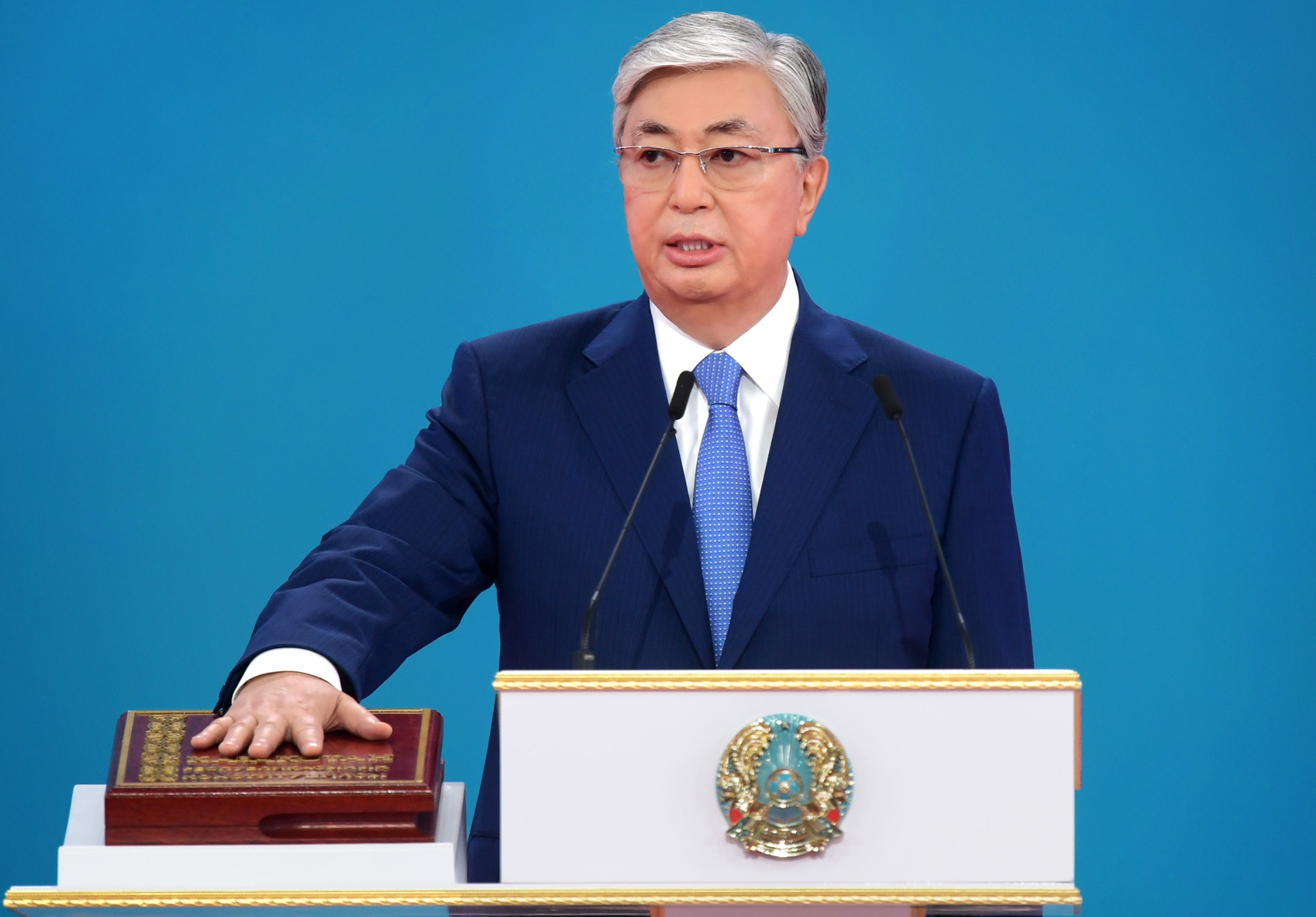
In early 2026, Kazakhstan’s authorities unveiled sweeping constitutional changes framed as parliamentary reform and democratic renewal. This article examines how President Tokayev’s push for a unicameral legislature and a “new constitution” in Kazakhstan masks a deeper consolidation of presidential power, raising serious questions about separation of powers, succession, and the entrenchment of authoritarian rule beneath the language of reform.
In early September 2025, the President of Kazakhstan Kassym-Jomart Tokayev proposed transitioning to a unicameral Parliament (abolishing the Senate) and stated that the related constitutional amendments would be put to a referendum in 2027. Within a month, a working group was unilaterally established by presidential decree, chaired by the State Counsellor and two presidential aides, and comprising 30 members representing parliamentary parties (all pro-presidential), the Minister of Justice, and politically loyal members of public organisations and academia.
Over the following four months, the working group developed amendments behind closed doors. To create an appearance of openness and lend the process a semblance of legitimacy, the authorities announced their willingness to consider public proposals submitted via the state petition portal, but these proposals were never published for public debate. Contrary to initial statements, on 15 January 2026, Tokayev unexpectedly announced that the amendments would affect more than 40 articles of the Constitution related to the functioning of the Parliament, and would be tantamount to adopting a new constitution.
According to these amendments, alongside the transition to a unicameral Parliament and a new electoral system, a vice-presidential position and a supreme advisory body, the People’s Council (with the right of legislative initiative), both appointed by the President, would be established. Tokayev also committed to strengthening the protection of citizens’ rights. To consolidate the above initiatives into a single document, the government announced the establishment of a Constitutional Commission comprising 130 members. Chaired by the head of the Constitutional Court, the commission included representatives of government bodies at all levels, as well as individuals with no background in law-making or legal expertise. According to an analysis made by the International Legal Initiative, only 53 members hold a law degree; of those, just 12 have advanced legal qualifications, and among them only four specialise in constitutional law or legal theory.
[T]he draft constitution was primarily designed to expand the President’s powers by strengthening his control over appointments and legislation.
The decree establishing the Commission was signed by the President on 21 January. On 28 January, the Commission announced that amendments would affect 84 per cent of the Constitution, and it presented its first draft on 31 January, just ten days after its establishment. The draft revealed that the parliamentary reform was largely a façade. Prepared in advance without inclusive public consultation, the draft constitution was primarily designed to expand the President’s powers by strengthening his control over appointments and legislation. It also creates a loophole that would allow the incumbent to extend his term.
On 11 February, without giving the public time to review the document and propose alternatives, the President signed a decree scheduling a constitutional referendum for 15 March 2026. The final text of the draft constitution was published on 12 February, with no opportunity for further revision.
Beyond the Super-President
President Tokayev has argued that recent political reforms, including constitutional changes, are steering Kazakhstan away from a super-presidential system toward a presidential republic with an authoritative and influential Parliament. However, according to the current draft constitution, the country would remain super-presidential under the guise of a semi-presidential system. Most importantly, the provisions of the current Constitution that define the president's status, functions, and excessive powers have not been revised to achieve a democratic balance among the branches of power. Instead, they have been expanded to incorporate additional presidential powers, reinforcing presidential encroachment upon Parliament's legislative powers.
The draft constitution enshrines the extraordinary powers that the first President temporarily held until December 1995, following the dissolution of Parliament and the subsequent usurpation of power. Under the proposed new constitutional framework (Article 47.2), during the temporary absence of Parliament, the President may, for two months, issue decrees with the force of constitutional or ordinary law without effective constitutional checks. By granting the President the authority to enact laws, including of constitutional nature, even on a temporary basis, the draft constitution completely undermines the principle of separation of powers.
Furthermore, even without a transitional provision in the draft requiring Parliament to be dissolved from 1 July 2026 and re-elected within two months, Article 62.1 permits the President to dissolve Parliament arbitrarily after consulting the Prime Minister and the Chairman of Parliament. This provision has been rephrased but remains in force. The Chairman of Parliament, under the draft constitution, is nominated by the President, who may dissolve Parliament if it repeatedly refuses to approve the nominee (Article 57.1). Similarly, Parliament may be dissolved if it repeatedly rejects the President’s nomination of a Prime Minister following consultations with parliamentary factions (Article 46.4). This constitutional configuration renders these key positions fully dependent on the President and undermines the independence of the legislative branch vis-à-vis the presidency.
The procedure for appointing key government officials has been simplified in favour of the President. While the current Constitution requires the Senate’s consent for the appointment of the Chairman of the Constitutional Court, the Chairman of the National Bank and Supreme Judicial Council, the Prosecutor General, and the Chairman of the National Security Committee, the draft constitution allows the President to make these appointments directly (Article 46.5). Moreover, whereas appointments were previously distributed proportionally between the President and the two chambers of Parliament, they are now consolidated under the President and subject only to parliamentary consent (Article 46.8). Thus, the President appoints and dismisses ten judges of the Constitutional Court, six members of the Central Election Commission, and eight members of the Supreme Audit Chamber. The President’s right to dissolve the Parliament in the event of repeated refusal to approve nominees leaves no institutional check on those appointments.
The draft constitution (Article 48.1) also expands the President’s immunity, providing that the President bears no criminal or administrative liability for actions performed in the exercise of his powers, except in cases of treason. Given Parliament’s political dependence, impeachment as a mechanism (Article 50.3) is practically unfeasible.
Extension and succession
The new role of Vice-President, replacing the State Counsellor, would be appointed by the President with the consent of Parliament by a majority vote, and would represent the President in relations with state institutions, with powers defined by the President (Article 46.2). The Vice-President would also be first in line to succeed the President in the event of resignation, dismissal or death (Article 51). Unlike in comparable democratic semi-presidential systems (Taiwan, Peru), the Vice-President is not jointly elected and therefore lacks popular legitimacy, thereby allowing power to be transferred to a politically loyal and dependent figure (the successor) without public mandate before an election. To some extent, this corresponds to what was included in Azerbaijan's Constitution (Articles 103.1 and 105.1).
The restrictive requirements for presidential candidates in Article 43.2 were supplemented by a discriminatory provision from the election law, which grants the right to stand only to citizens with at least five years of experience in public service or elected office. The first paragraph of the same article, which provides that the same person may not be elected President more than once, remains unamendable.
This development effectively compromises the sole constitutional barrier to the concentration of presidential power in the hands of one person beyond a single term.
However, by presenting the amendments as a new constitution and omitting transitional provisions concerning the incumbent’s single seven-year term, the authorities create the possibility of renewing his tenure through interpretation by the Constitutional Court, as occurred under his predecessor. This development effectively compromises the sole constitutional barrier to the concentration of presidential power in the hands of one person beyond a single term.
The weak Parliament (Kurultai)
Amendments aimed at strengthening presidential authority further aggravate the Parliament's already fragile position within Kazakhstan’s political system. In addition to transferring some of the powers of the abolished Senate to the President, the draft constitution deprives the unicameral Parliament of the means to protect itself from dissolution and to counter the president’s legislation and his unilateral appointments, including the appointment of its own chairman. The unicameral Parliament has been renamed the Kurultai (Article 52) and remains the highest representative body exercising legislative power. This formulation indicates that Parliament is not the sole institution vested with legislative authority.
The creation of a non-parliamentary body authorised to initiate legislation further diminishes the constitutional role and functions of Parliament.
Article 60 provides that, alongside Parliament, the President, and the government, a new representative body appointed by the President, the People’s Council (126 seats), is also vested with the right of legislative initiative and the authority to propose a referendum. At the same time, the draft constitution does not provide any clarification regarding the procedure for its formation, composition, or other powers, instead referring these matters to constitutional law. According to the President’s statement, the body would be created on the basis of the Assembly of the People of Kazakhstan and consist of 42 representatives from ethnocultural and major public associations, maslikhats, and regional public councils. The creation of a non-parliamentary body authorised to initiate legislation further diminishes the constitutional role and functions of Parliament. In this case, the establishment of a politically loyal body to carry out legislative interventions on the President’s behalf mirrors the recent harmful practice of constitutional changes in Belarus.
The Parliament would comprise 145 seats, elected for a five-year term under proportional representation (PR) in a single national constituency (Article 53), with a 5 per cent threshold. The size of parliament remains unchanged (if both chambers are combined) and does not reflect experts' previous recommendations to use the cube root rule to determine the optimal number of seats for effective representation. This PR system has previously been used in Kazakhstan, resulting in a one-party parliament in 2007. In practice, the authorities employed this model to impose strict barriers to ballot access through restrictive party registration rules and to influence electoral outcomes by manipulating vote counting. Its reintroduction, therefore, appears intended to reinforce presidential control over the electoral process, the composition of Parliament, and the activities of MPs through registered parties, as well as through the retained imperative mandate in the revised Constitution (Article 55.4). In the context of existing restrictions on the establishment and registration of political parties, the proposed electoral system is likely to further constrain citizens’ right to stand for election.
From a constitutional perspective, the entrenchment of the electoral system’s fundamental parameters should reflect a political compromise within society regarding the rules of electoral competition and the formation of the state’s principal representative body.
Conclusion
The announcement of parliamentary reform appears to have functioned as a vehicle for consolidating presidential authority, including the potential extension of the presidential term. The nature and scope of the proposed constitutional amendments indicate a trajectory toward the deeper entrenchment of authoritarian and restrictive practices within the constitutional order following President Tokayev’s consolidation of power after the January 2022 protests. Beyond the changes to the presidency and Parliament discussed in this article, the draft constitution introduces new, vaguely formulated provisions, such as those prohibiting actions “to encroach on the honour and dignity of others, the constitutional order, public morality, or public order,” which could be liable to curtail the exercise of the rights to freedom of assembly, association, and expression. In this vein, the provision of the draft constitution which enshrines the primacy of the Constitution over international treaties could, for example, allow the provisions of the International Covenant on Civil and Political Rights to be interpreted as inconsistent with the Constitution.
From a procedural standpoint, the draft presented by the authorities is not a new constitution but a revised version of the current one with many similarities in the text. Notably, the commission was established to develop amendments to the existing constitution, not to draft a new one. By characterising the draft as a revised constitution, the authorities also bypass the Constitutional Court’s review required under Article 91.3 of the Constitution. In any case, considering that the Constitutional Court’s Chairman also serves as Head of the Commission, institutional impartiality in the case of a review cannot be expected.
Finally, the draft constitution also emphasises the personal image of the second President, who inserted his own political slogans, “Just Kazakhstan” and “Law and Order,” into the document’s preamble. According to LPRC experts, these slogans do not satisfy the requirement for the durability of the constitutional text and do not belong to any legal categories, thereby conflicting with rule of law principles.
On this basis, there are substantial grounds to anticipate that, on 15 March, the authorities will secure approval of the draft constitution through a manipulated referendum. Following approval of the referendum results, the draft constitution will be adopted, triggering the implementation of legislative amendments which, in a worst-case scenario, could be enacted by presidential decree ahead of the parliamentary elections. This development would align Kazakhstan more closely with the entrenched autocratic models of Russia and Belarus.
About the Author
Dimash Alzhanov is a political analyst and international election expert.
Suggested Citation
Dimash Alzhanov, ‘A New Constitution for Kazakhstan: Parliamentary Reform as a Façade for Presidential Monopoly’, ConstitutionNet, International IDEA, 20 February 2026, https://constitutionnet.org/news/voices/new-constitution-kazakhstan-parliamentary-reform-facade-presidential-monopoly
Further Reading
- Updates on constitutional developments in Kazakhstan.
- Dimash Alzhanov, Kazakhstan’s referendum: regime consolidation instead of genuine political reforms (2022).
- International IDEA, Primers on Constitution-Building.
Contribute to Voices from the Field
If you are interested in contributing a Voices from the Field piece on constitutional change in your country, please contact us at constitutionnet@idea.int.