

Constitution Amendment or Constitutional Rewriting? Overview of the Constitutional Reform Discourse in Nepal
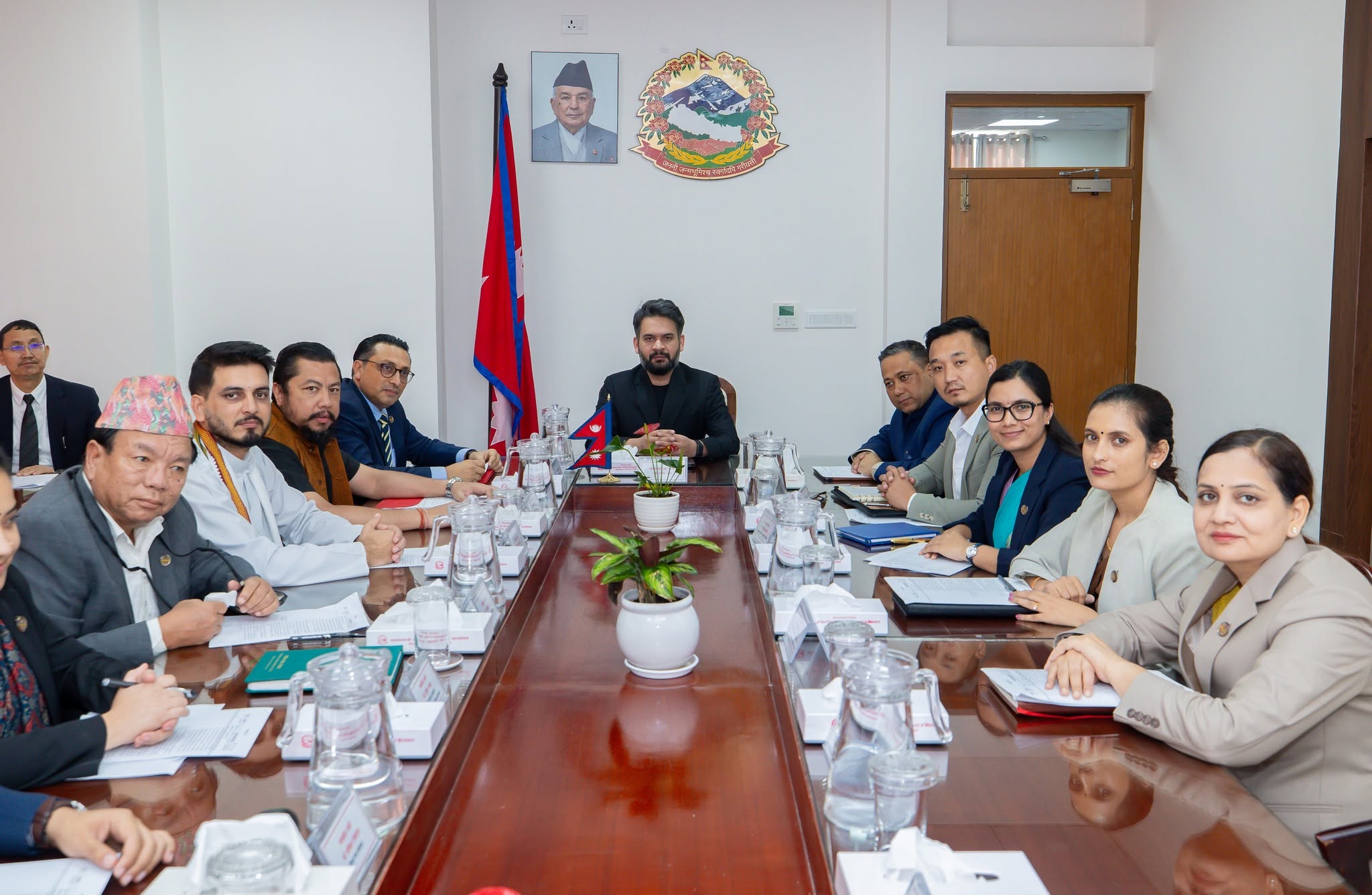
As Nepal’s new government turns to constitutional reform, its efforts to reshape the country’s constitutional framework are exposing tensions between political renewal and constitutional consensus. Examining the Constitution Amendment Task Force and its proposals, Ojaswee Bhattarai considers the growing divide over the scope and direction of reform, arguing that meaningful change will require a more inclusive and evidence-based assessment of what has, and what has not, worked under the current Constitution.
20 September 2025 marked the 10-year anniversary of the promulgation of the Constitution of Nepal and should have invited celebrations across the country to acknowledge its success in ensuring a peaceful transition and institutionalizing Nepal’s republican democracy. However, on the eve of the celebration, Nepal witnessed thousands of young people, the Gen-Zs, taking to the streets to express their discontent with the country’s “rabid corruption” and bad governance.
The widespread protests led to a political vacuum and a constitutional crisis in the country. While not originally part of the Gen-Z agenda, the people of Nepal, including the political diaspora, could therefore not leave constitutional reform out of the conversations about rebuilding a new Nepal.
This was evident in the 10-point Agreement signed between the Gen-Z representatives and the Government of Nepal in the aftermath of the protests to institutionalize and consolidate the demands of the Gen-Z protesters. Clause 7 of the Agreement calls for constitutional reforms, denounces implementation gaps in the current Constitution and the co-optation of several of its provisions by political leaders, and expresses the desire of the Gen-Z to be included in the constitution-making process. The call for constitutional reform was already a key aspect of the 7-point agreement signed by the then coalition government of the Nepali Congress and the Communist Party of Nepal (Unified Marxist–Leninist) (CPN-UML) back in 2024. That agreement, however, never came to fruition.
Mid-Term Elections and Constitutional Amendment
The “extra-constitutional” Government, formed as a response to the Gen-Z protests and led by interim Prime Minister Sushila Karki, successfully carried out the mid-term general elections in March 2026. Despite several reservations, all major parties in the country contested the elections with their reformed manifesto, including commitments to reform the Constitution. A common theme in all manifestos was the need to improve Nepal’s governance model to ensure political stability.
The mid-term elections paved the way for the formation of an elected government, bringing the country back onto a constitutional track. The widely accepted narrative regarding the impossibility of forming a one-party majority government was defied as the Rastriya Swatantra Party (RSP) won almost two-thirds of seats in Parliament.
In its campaign, the RSP was among the parties advocating for constitutional reform, committing to publishing a discussion paper covering a range of constitutional issues, including a directly elected executive; a fully proportional Parliament; independent, expert Ministers who are not members of Parliament; non-partisanship of local government; and parliamentary reform.
Thus, when the majority Government was formed, the RSP announced in its 100-Point Governance Reform Action Plan the creation of a Constitution Amendment Task Force (the Task Force) to prepare a discussion paper and reach national consensus on constitutional reforms.
The Constitution Amendment Task Force
On 29 March 2026, the Government Spokesperson announced the Cabinet’s decision to form the Task Force under the leadership of the political advisor to the Prime Minister, Asim Shah, with the responsibility of preparing a discussion paper within three months. Shah, a filmmaker and former parliamentarian from the RSP, has no prior legal or constitutional experience, which led to criticism across the country. Following his appointment, parties in Parliament were invited to send representatives to formulate proposals for the discussion paper, in line with the Cabinet’s decision that the process should be participatory, transparent and fact-based.
All parties initially appointed representatives to the Task Force, except the Nepali Congress which instead first sought clarification from the Government. Its concerns centred primarily on the Task Force’s mandate and scope of work. It asked how the Government and the Task Force planned to ensure that the process would be inclusive and participatory, questioned how the Task Force planned to engage local and provincial governments, and requested clarification on the Government’s position regarding the Constitution’s fundamental values and basic structure. Since the Government did not respond to those concerns, the Nepali Congress did not appoint any representative to the Task Force. This stance was later echoed by the CPN-UML, which had initially nominated representatives to the Task Force but quickly withdrew from the process, claiming that the Government had not clarified its own position on the process and that its proposals undermined Nepal’s constitutional principles.
Despite opposition from the two major opposition parties, the Task Force held 22 formal meetings and a range of informal meetings, gathering around 184 stakeholders, including the former President, legal and constitutional experts, former justices, former bureaucrats, women’s rights activists and the private sector. The Task Force also requested feedback and suggestions from civil society organizations and members of the public. It reportedly received around 44,613 submissions through digital platforms and phone calls.
The Gen-Z groups invited to submit their proposals to the Task Force boycotted the meeting, alleging that the Government had ignored Clause 7 of their Agreement (...).
The Gen-Z groups invited to submit their proposals to the Task Force boycotted the meeting, alleging that the Government had ignored Clause 7 of their Agreement, which lays out in detail the process to be followed to form the Constitution Amendment Task Force. They also criticized the process as insufficiently inclusive, arguing that participation was limited to Gen-Z representatives residing in the capital and those with the networks and connections necessary to secure an invitation.
Task Force’s Early Proposals
To inform the development of the discussion paper, on 25 May 2026, the Task Force released 54 proposals divided across eight themes for debate with different stakeholders.
The first theme on the governance model includes seven proposals ranging from introducing a directly elected executive to reforming the parliamentary system. The second theme on the electoral system recommends a fully proportional electoral system, a right to recall, voting rights for migrant Nepalis, and a prohibition on electoral coalitions.
The third, fourth and fifth themes focus on the issue of federalism, the abolition of Nepal’s Provincial Assemblies, the introduction of a directly elected provincial executive, and the establishment of a party-less system at the local level. The sixth theme on the judiciary contains the most proposals, with 11 key areas identified. It includes suggestions to restructure the judiciary, allow the reappointment of judges, as well as reform the appointment process for justices and the structure of the Judicial Council.
The seventh theme revolves around the number, composition and appointment process of constitutional bodies and suggests introducing mechanisms to ensure a balance between their autonomy and accountability. Finally, the Task Force also suggests introducing the mandatory summoning of parliamentary sessions, citizenship rights for Nepalis who are not residents of the country, and an age limit for candidacy in parliamentary elections.
Responses to the Task Force
A week before the three-month deadline for the Task Force to submit its discussion paper to the Government, four major political parties, including the Nepali Communist Party, left the Task Force. They claimed that, instead of building consensus, the Task Force had been bulldozing the process through its numerical majority and accused it of attempting to prepare a Constitution Amendment Bill instead of a discussion paper.
With only three members representing the RSP, the Shram Sanskriti Party and the Rastriya Prajatantra Party, as well as two Government Secretaries representing the Office of the Prime Minister and the Nepal Law Commission, remaining in the Task Force, constitutional experts in the country claim that it has lost its legitimacy.
[The Task Force's] composition is predominantly male, with the only exception being an ex-officio Government Secretary, raising concerns about the inclusivity of the process.
Moreover, its composition is predominantly male, with the only exception being an ex-officio Government Secretary, raising concerns about the inclusivity of the process. These concerns have been further amplified by statements made by the four representatives who recently left the Task Force, citing concerns over the Task Force Chair's lack of commitment to the Constitution's fundamental values, as well as the inclusion of certain amendment proposals without any explicit justification for their incorporation. Some have also raised concerns regarding the expertise and qualifications of the Chair.
Amidst such criticism of the composition and working methods of the Task Force, several parties have clarified their positions on the nature and scope of the constitutional amendments they support. The Nepali Congress and the CPN-UML believe that the fundamental values and principles of the current Constitution, such as federalism, inclusion, republican democracy, secularism and fundamental rights, are the essence of the Constitution and should not be up for debate. They both stand firm on the need to first carry out an assessment of the implementation of the Constitution to understand whether the aspirations of the Nepali people have been achieved since its promulgation. They believe that the starting point for any amendment should be Article 265 of the Constitution which requires Parliament to review the relevance and efficacy of constitutional bodies 10 years following the enactment of the Constitution. They stand firm on their position that the parliamentary system, the federal structure and the mixed electoral system should not be open to review, while conceding that they could be reformed to make them more effective. The RSP representative from the Task Force, however, underscored that the amendment proposals are merely technical and not political and do not challenge the basic structure of the Constitution.
In contrast, the Nepali Communist Party is pushing for a directly elected executive, a fully proportional electoral system, and the restructuring of the judiciary following a competitive process, among others. The Madhesh-based parties demand the incorporation of an identity-based federalism and more autonomy and power granted to provincial structures. The Rastriya Prajatantra Party requested the Government to open a debate on the issues of monarchy and secularism.
Constitutional Amendment or Rewriting?
On 12 June, two weeks before the original submission deadline for the discussion paper, the Government granted a one-month extension. The Task Force submitted the paper to the Government on 16 July. While not public, the discussion paper reportedly suggests amending 245 articles out of 308. This has enraged political parties and certain legal and constitutional experts, who claim that the majority Government is attempting to rewrite the Constitution as a form of “tyranny” of the majority.
What adds to this suspicion is the recent adoption of the House of Representatives Regulations by Parliament, which, in Rule 140(11), provides that a two-thirds majority in a joint sitting of the House of Representatives and National Assembly would suffice to amend the Constitution.
The Nepali Congress, CPN-UML and constitutional lawyers argue that this represents a cooptation of Article 274 of the Constitution which requires approval from a two-thirds majority in both houses of Parliament for constitutional amendments. While members of the Nepali Congress have petitioned the Supreme Court to challenge the constitutionality of the provision, the ruling majority’s move indicates its intention to amend the Constitution based on numbers rather than national consensus. The hearing for the case was supposed to take place on 12 August 2026 but was postponed due to time constraints. On the other hand, the Prime Minister clarified that the Task Force discussion paper merely represented a compilation of suggestions.
Conclusion
The Government has yet to release the Task Force discussion paper. Observations and debates are therefore currently subject to speculation, as we wait for the Government to provide clarity on its position and on how the constitutional debate shall proceed. What has exacerbated the confusion and uncertainty regarding the process is the fact that the Government has not released an official statement on its reform objectives, thereby feeding speculation.
The variation in the Task Force proposals reveals that, while constitutional reform in Nepal is still on the agenda for different stakeholders, forging consensus across the spectrum of proposals seems elusive.
The variation in the Task Force proposals reveals that, while constitutional reform in Nepal is still on the agenda for different stakeholders, forging consensus across the spectrum of proposals seems elusive. Furthermore, the narrative that Nepal’s constitutional challenges reflect an “implementation problem” rather than a problem with constitutional provisions also seems pertinent in the discourse. The conversation on what needs to be amended cannot precede a reflection on what in the current framework has not worked and why. Hence, as the Gen-Z Agreement suggests, a nationwide, inclusive and participatory appraisal of the achievements and shortcomings of the Constitution thus far is essential. An evidence-led, systematic approach to identifying where the Constitution requires amendment will be the only way to deliver the promises the RSP pitched and to move in the direction of the new Nepal the Gen-Z envisioned.
About the Author

Ojaswee Bhattarai is a lecturer of Constitutional Law at the Nepal Law Campus, Tribhuvan University. She is also a legal researcher and practitioner based in Nepal, with an interest in studying and understanding law in society.
Suggested Citation
Ojaswee Bhattarai, ‘Constitution Amendment or Constitutional Rewriting? Overview of the Constitutional Reform Discourse in Nepal', ConstitutionNet, International IDEA, 17 August 2026, https://constitutionnet.org/news/voices/constitution-amendment-or-constitutional-rewriting-overview-constitutional-reform-discourse
Further Reading
- Updates on constitutional developments in Nepal.
- Bipin Adhikari, Nepal’s Gen Z Movement and Constitutional Crisis (2026).