

Peace Agreement and Constitutional Amendments in South Sudan: Recent Developments
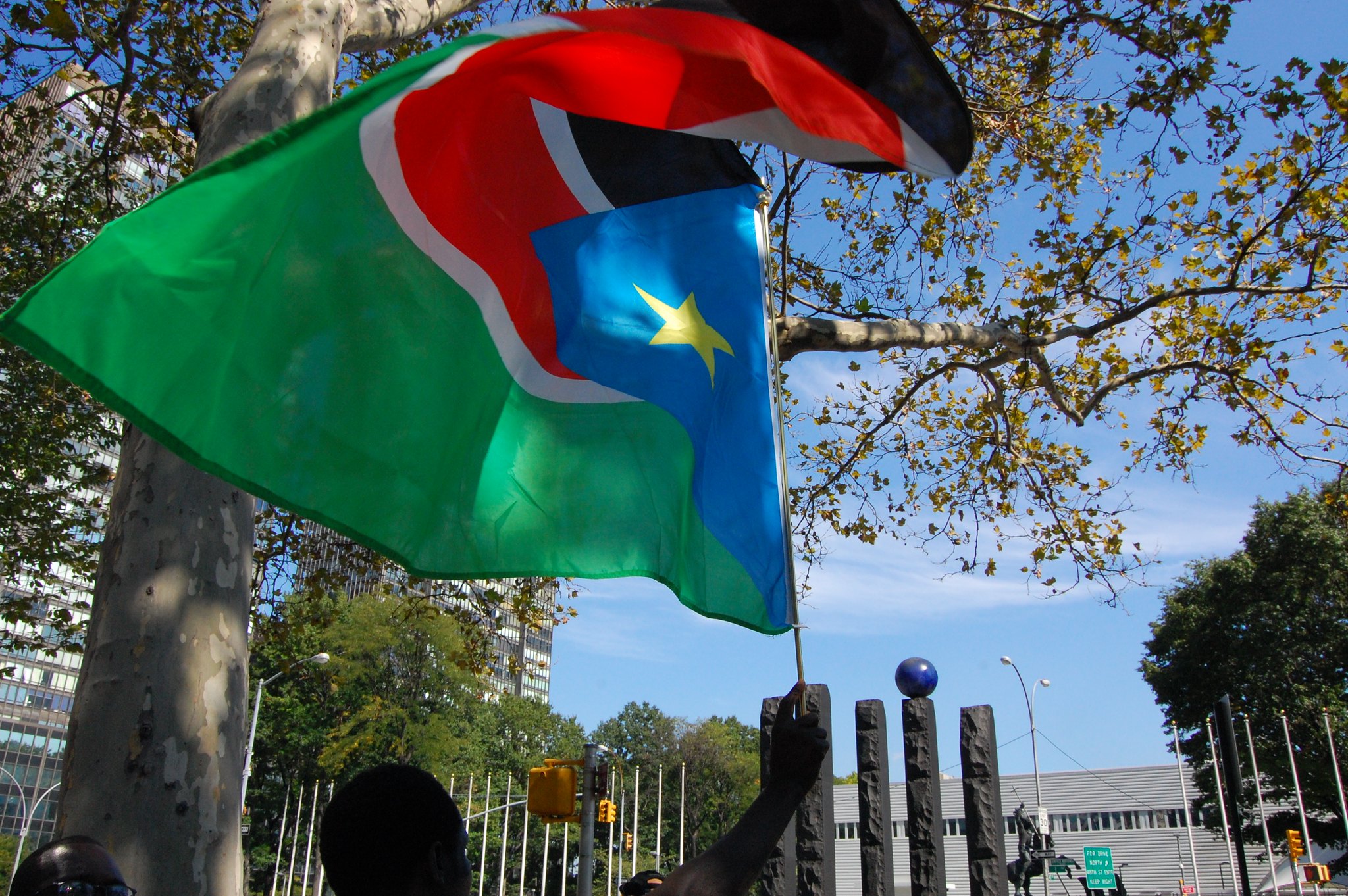
South Sudan has taken a decisive step towards holding its first national elections since independence by amending the 2018 Revitalised Agreement on the Resolution of the Conflict in South Sudan (R-ARCSS). While these changes have cleared the formal path to elections, they have also sparked controversy over their legality, their implications for the country's fragile peace framework, and the legitimacy of the electoral process. In this piece, the authors examine the constitutional and procedural debates surrounding the amendments, arguing that although the reforms may be legally defensible, they leave unresolved questions about South Sudan's democratic transition and the prospects for credible elections.
South Sudan has entered a decisive and consequential phase of its political transition. In early July 2026, the Transitional National Legislature approved sweeping amendments to the 2018 Revitalised Agreement on the Resolution of Conflict in South Sudan (R-ARCSS), removing two of the principal preconditions for holding national elections: the completion of a national population and housing census and the adoption of a permanent federal constitution. By doing so, the amendments cleared the legal path for the elections scheduled for December 2026 to take place. If held as planned, these will represent the country’s first elections since its independence in 2011. The amendments, however, have generated mixed reactions over procedure, legitimacy, and the future of the peace framework itself. This piece aims to appraise them in light of the debate over whether they were procedurally improper and to point to potential implications on the peace process.
Context of the peace implementation and transition
Founded in 2011, the Republic of South Sudan is governed under the Transitional Constitution and the R-ARCSS. The country was supposed to adopt what is referred to as the ‘permanent’ constitution prior to holding national elections by 2015. However, political tensions between the government and opposition groups escalated into widespread violence in 2013, leading to the signing of a peace agreement in 2015 and the cancellation of the planned 2015 elections. In 2016, the 2015 agreement and the constitution-making process that had started in 2012 under the Akolda Commission both collapsed due to another episode of violence.
The constitution-making process was only revitalized in 2018 through the signing of the R-ARCSS, which established a transitional period scheduled to last until 2023, and set out a series of sequential steps intended to conclude the transition through elections originally planned for 2022. However, delays in implementing certain key prerequisites necessitated an extension of the transition period and the postponement of elections to 2024. While some progress was made in that period, further challenges to reach that deadline led to a third extension of the transition to December 2026.
As the new deadline approached, the parties, however realized that several of the prerequisites for holding elections set out in the R-ARCSS were still left unimplemented. As a fourth extension of the transition was considered undesirable, the parties instead decided to amend the R-ARCSS to remove these prerequisites, as described in the following sections.
Amending the Peace Agreement
The path leading to the amendments began several months ago, when it became apparent that implementation of the R-ARCSS was lagging behind, while the election date was fast approaching. In response, the parties to the R-ARCSS convened an extended Presidency meeting on 10 December 2025 and agreed to remove the completion of the national population and housing census and the adoption of a permanent constitution as prerequisites for holding elections, both considered obstacles that could otherwise delay elections for years. Importantly, removing these elections preconditions required amending the R-ARCSS and the relevant article in the Transitional Constitution.
According to Article 8.4 of the R-ARCSS, amendments to the Agreement require approval of at least two-thirds of the members of the Council of Ministers of the Revitalised Transitional Government of National Unity (RTGoNU), followed by the consent of at least two-thirds of the voting members of the Revitalised Joint Monitoring and Evaluation Commission (RJMEC). Any proposed R-ARCSS amendment must then be submitted to the Transitional National Legislature for deliberation and adoption in accordance with the constitutional amendment procedure which treats changes to the R-ARCSS as constitutional amendments. It is to be noted that the R-ARCSS has been incorporated into the Transitional Constitution since 2018, and its implementation has resulted in more than eleven constitutional amendments.
According to this procedure, on 17 April 2026, the Minister of Justice and Constitutional Affairs tabled before the Council of Ministers the proposed changes to the R-ARCSS. However, the proposals did not only affect the articles relating to the population and housing census and the permanent constitution, but also those governing the incorporation of the R-ARCSS into the Transitional Constitution (Article 8.2) and the supremacy of the R-ARCSS over national laws and the Transitional Constitution in the event of conflict (Article 8.3). In fact, reports on the Government’s proposals indicate that both were initially proposed for deletion along with a proposal to retitle Chapter Eight to remove any reference to supremacy. In addition, several pre-elections tasks in the R-ARCSS were shortened from six to three months. The Council of Ministers passed these amendment proposals and directed the Minister of Justice and Constitutional Affairs to table them before RJMEC for deliberation and consent, as stipulated in Article 8.4.
The RJMEC’s Interim Chairperson (...) raised what he described as ‘serious concerns’, indicating that a majority of the Commission’s members opposed the amendments for risking collapse of the R-ARCSS.
The RJMEC’s Interim Chairperson, Ambassador Aggrey George, raised what he described as ‘serious concerns’, indicating that a majority of the Commission’s members opposed the amendments for risking collapse of the R-ARCSS. In particular, the RJMEC warned that ‘the proposed amendments would alter the structure and architecture of the R-ARCSS, undermining its legal foundation, abrogating its supremacy, and weakening the oversight role of the Inter-Governmental Authority on Development (IGAD) and the African Union as guarantors’, urging that changes should ‘preserve its integrity, legality, and continuity’.
The Government viewed this position as an overreach of the RJMEC’s mandate and an obstruction to electoral preparations, describing the R-ARCSS as structurally defective and arguing that it lacked arbitration mechanisms to resolve institutional deadlocks. That notwithstanding, the RJMEC maintained that, under the R-ARCSS procedure, its endorsement is a mandatory step. It is the considered view of the authors that the required RJMEC’s ‘consent’ under article 8.4 is merely consultative and designed to enhance process legitimacy. The impasse resulted in the Bill proceeding to Parliament without the RJMEC’s consent.
In a bid to garner support from international partners to pressure the government into abandoning the impugned amendments, the RJMEC wrote a letter dated 20 May 2026 to the IGAD, RTGoNU and the R-ARCSS’ guarantors, warning that the proposed amendments risked undermining the peace deal and urging IGAD to convene an urgent summit on the matter. This intervention prompted deliberations within the Council of Ministers, which ultimately resulted in the Bill being amended to reverse the proposed repeal of Articles 8.2 and 8.3, thereby retaining the supremacy of the R-ARCSS. It is unclear whether the Bill ought to have been formally recalled, given that a matter pending before the legislature should not ordinarily be debated by the executive.
(...) [E]lections are expected to proceed under the amended Transitional Constitution rather than the would-have-been ‘permanent’ constitution (...).
On the recommendation of the Committee on Legislation and Legal Affairs, and during the parliamentary sitting chaired by the Speaker, Parliament approved, on 1 July 2026, the proposed amendments, as revised by the Council of Ministers. The population census and the permanent constitution-making process were thus deferred until after the December 2026 elections, leaving both tasks to a future elected government. In addition, the proposed amendment relating to the revision of Chapter Eight’s title were also abandoned. In this way, elections are expected to proceed under the amended Transitional Constitution rather than the would-have-been ‘permanent’ constitution, as was envisaged under the R-ARCSS.
Where do things stand now?
Notwithstanding the challenges highlighted above, electoral preparations are reportedly accelerating. Whether such preparations remain on track in relation to required legal harmonisation, civic challenges, as well as electoral logistics and timelines, remains to be seen. Meanwhile, the Political Parties Council has granted full registration to five additional political parties, including the former Sudan People’s Liberation Movement-in-Opposition (SPLM-IO) faction, now registered as the ‘IO Party’ led by the Minister of Peacebuilding, Stephen Par Kuol. This brings the total number of legally registered political parties eligible to contest elections to thirty-nine.
Additionally, in June 2026, the National Elections Commission announced 22 December 2026 as the election date. The announcement is expected to be followed by critical tasks as mandated by electoral law: voter registration, civic education, the development of regulations governing candidate nomination, and election campaign spending threshold––all to be completed within the six months prior to elections. These obligatory provisions will need to be harmonized with the amended Constitution to ensure legal consistency.
With only five months remaining until the scheduled election of 22 December 2026, significant challenges remain.
With only five months remaining until the scheduled election of 22 December 2026, significant challenges remain. Ceteris paribus, a pulse check by a non-partisan and right-thinking ‘constitutional physician’ would likely yield a worrying diagnosis: that the prospects of holding the elections as scheduled remain uncertain and, indeed, increasingly unlikely.
Concluding remarks
The push for elections to end South Sudan’s seemingly perpetual transition is understandable. In fact, the country has not held elections since gaining independence on 9 July 2011. However, the idea that electionscan be shoehorned in irrespective of whether or not the necessary political and legal conditions exist is a blind impulse, premised on the notion that elections are a reasonable ‘alternative devil’ to yet another extension, particularly given the fatigue of citizens and partners with repeated election postponements.
On 22 July, the President assented into law the amendments to the R-ARCSS as passed by Parliament, ostensibly clearing the legal path towards elections. There are, however, a myriad of questions lingering on the mind of a reasonable man: Which constitutional framework will govern the elections, given that the Transitional Constitution has been repeatedly amended to incorporate the R-ARCSS? Will the governing framework revert to the Constitution as it stood prior to incorporation of the R-ARCSS, save for provisions relating to the transition timeline? What are the implications of conducting elections without a census and a permanent constitution? How might this impact the legitimacy of the electoral outcome? All these concerns create a cloud of doubt regarding elections preparedness.
About the Authors

Joseph Geng Akech is a South Sudanese constitutional scholar and Assistant Professor, School of Law, University of Juba. Dr Akech holds a Doctor of Laws (LLD) in constitutional law, University of Pretoria, South Africa. He specializes and has widely published in constitutional design, transitional justice, and human rights. His most recent edited book volume is titled “Post-Conflict Constitution-Making: Dilemmas and Options for South Sudan” (PULP 2026). Dr Akech is a member of the African Network of Constitutional Lawyers and Editor for the Horn of Africa blog.
Peter Garang Geng is a Lecturer and Head of the Research and Publication Department at the School of Law, University of Juba, where his research focuses on comparative constitutional law, oil and gas law, environmental law, and legal research methodology. He is a practicing lawyer and a Member of South Sudan Bar Association. Garang holds a Master of Laws in International Law, from Sharda University, India, and an LLM candidate in Oil and Gas Law at the Institute of Petroleum Studies, Uganda. He has recently been admitted to a PhD program in Environmental Law at the University of Nairobi.
Suggested Citation
Peter Garang Geng and Joseph Geng Akech, ‘Peace Agreement and Constitutional Amendments in South Sudan: Recent Developments’, ConstitutionNet, International IDEA, 26 July 2026, https://constitutionnet.org/news/voices/peace-agreement-and-constitutional-amendments-south-sudan-recent-developments
Further Reading
- Updates on constitutional developments in South Sudan.
- International IDEA, Enhancing Prospects of Stabilization in South Sudan: Targeted Constitutional Reforms to Reduce Winner-Takes-All Politics (2026).
- Peter Garang Geng and Joseph Geng Akech, What Does Extension of the Transition Period Mean for Constitution-Making in South Sudan? (2024).
- Joseph Geng Akech, Out of Time but Full of Enthusiasm? Assessing Progress and Hurdles in South Sudan’s Constitution-Making Process (2022).