

Constitutional Amendments in Lao PDR: Strengthening Local Governance, Bolstering the Economy, and Combatting Corruption
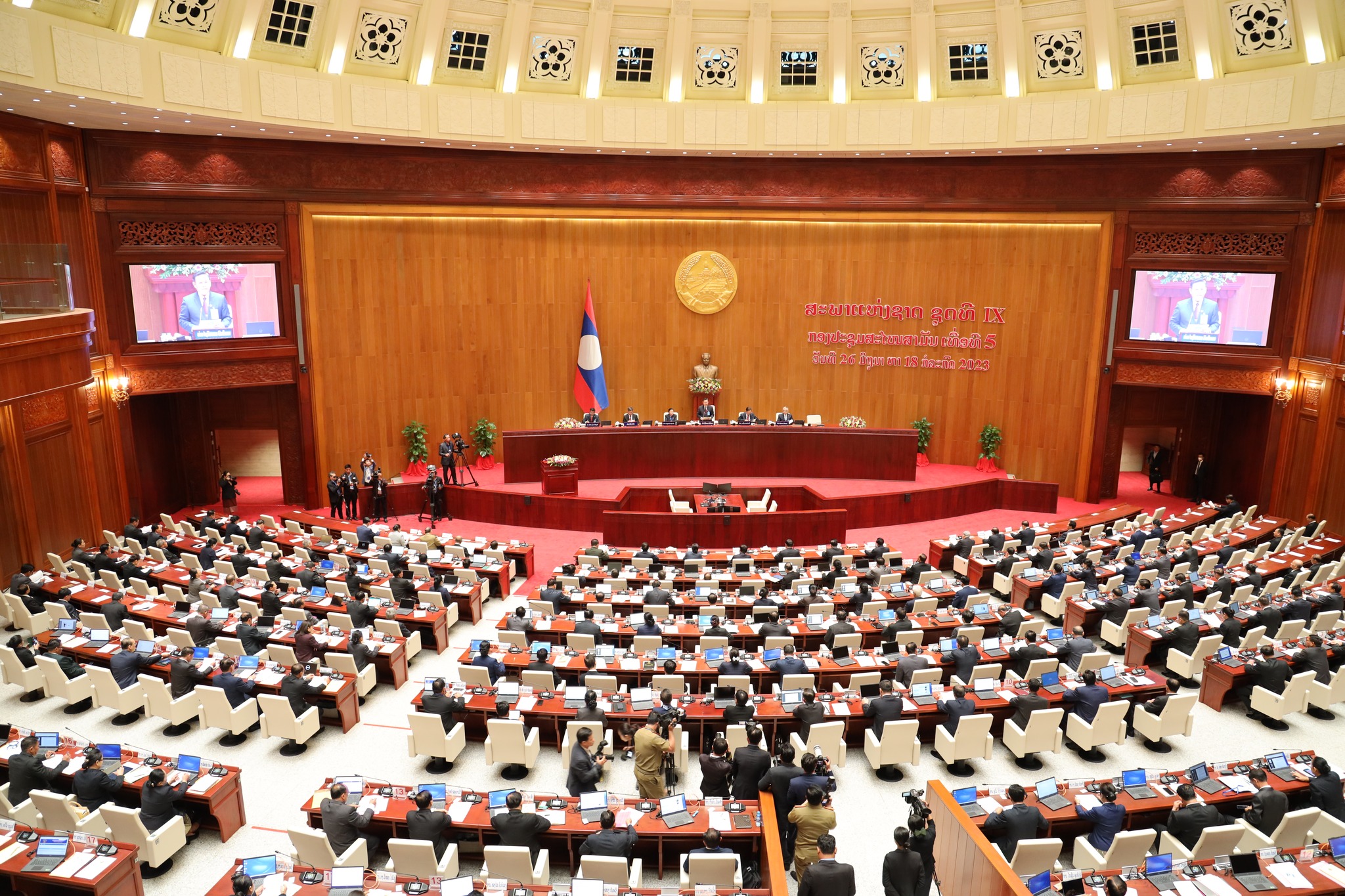
In June 2024, the Lao People’s Democratic Republic launched its first constitutional amendment process since 2015, culminating in the adoption of wide-ranging amendments by the National Assembly in March 2025. The amendments modified sixty-two articles and introduced five new provisions, reshaping the country’s constitutional framework. This article analyzes the amendment process, the political dynamics behind its rapid adoption, and the key reforms affecting local governance, economic policy, and anti-corruption institutions. It concludes by examining early implementation progress and the challenges of translating constitutional change into effective governance reform.
In June 2024, for the first time since 2015, the Lao People’s Democratic Republic (“Lao PDR”) embarked on a process to amend its Constitution that was originally promulgated in 1991 and subsequently amended in 2003 and 2015. The amendment process followed a more or less routinized decennial review cycle and was led by the National Committee for the Amendment of the Constitution (“the Committee”)—composed of 21 vice minister- and minister-level officials from the ruling communist party, the government, the judiciary, and the National Assembly (“the NA”)—charged with assessing the Constitution, soliciting inputs, and drafting proposed amendments.
On 20 March 2025, the NA formally approved the amendments to the Constitution during the 2nd Extraordinary Session of the NA’s 9th Legislature. The amendments include changes to 62 articles, as well as the introduction of 5 new provisions. In this context, this article analyzes the adoption process of these amendments as well as the main changes introduced and concludes with reflections on their implementation status and the way forward.
2025 Constitutional Amendment Process
In order to undertake constitutional amendment work methodically, the Committee committed itself to the following procedural steps set forth under its work plan: evaluate the current Constitution, research good practices and lessons learned from other countries (including Vietnam), organize internal committee meetings, prepare a preliminary draft, report on progress and submit the draft to the Politburo, the NA Standing Committee, and the Party Central Committee for further guidance, organize a series of consultation meetings at central and provincial levels as well as high-level comprehensive review sessions and public consultations, finalize the draft with relevant authorities, and submit it to the NA session for consideration and approval.
To execute the public consultation process, the NA posted the latest draft constitutional amendments on the Official Gazette website and on its own website in January 2025 in order to solicit comments from the public. Yet, no information is officially provided as to whether and how the Committee incorporated public comments in the updated constitutional amendment text, making it difficult to properly assess the meaningfulness of the public participation process.
The 2025 amendments were adopted through the shortest constitutional amendment process in Lao PDR, taking only a matter of ten months since the NA held the first Committee meeting in June 2024 up until its adoption in March 2025. By comparison, the National Assembly was already holding debates on the May 2003 constitutional amendments in December 2001 and took about 16 months to complete the amendment process for the 2015 amendments.
[H]igh-ranking officials across government branches commonly attributed this hasty process to the sense of urgency shared within the government to reform the local governance structure (...).
Several factors likely contributed to the unusually expeditious process this time around: the strong commitment of senior political leadership, the relatively simple constitutional amendment procedure under which the NA is vested with exclusive amendment authority, the treatment of constitutional amendments as a near-decennial custom with approval all but guaranteed, and the highly planned nature of amendments under one-party rule. Aside from those factors, high-ranking officials across government branches commonly attributed this hasty process to the sense of urgency shared within the government to reform the local governance structure to address the issues of disconnect and inefficiency between districts and villages (1). In fact, the amendments to the Law on Local Administration took place in parallel to the constitutional amendments, and were approved on the same day.
Highlights of the 2025 Constitutional Amendments
Chapter I: Political System
Lao PDR introduced a new Article 11 according to which “[t]he entire territory of the Lao People’s Democratic Republic is sacred and inviolable. Any actions that threaten national independence, unity, sovereignty, or territorial integrity, or that obstruct national defense and development, shall be severely punished”. This provision is quite similar to Article 11 of the Constitution of Vietnam. The rationale for such addition may be attributed to several factors, such as public discontent with the current economic situation (which, some observers argue, could pave the way for political change), alleged criticisms against the government that could eventually lead to public unrest, and strengthened cooperation between Lao PDR and Vietnam over public security. In any case, Article 11 explicitly demonstrates Lao PDR’s determination in removing any threats (internal or external) against the state with punitive measures.
As this article was added under Chapter I “Political System,” it is not expected to effectively limit people’s fundamental rights and freedoms, protected under Chapter IV. Nonetheless, given the language used and its potential implications, Lao observers should monitor closely how Article 11 will be interpreted and implemented. For instance, if the NA interprets “[a]ny actions that threaten national… unity” broadly, any criticisms (however legitimate they might be) against the government and its policies or peaceful demonstration in this regard could be “severely punished” even though such rights and freedoms are constitutionally protected (Article 45). The international community, including the European Union and the UN Committee on the Elimination of Discrimination against Women, has repeatedly warned against the “undue restrictions” on the work of civil society in Lao PDR, especially when it comes to freedoms of expression and assembly. As such, this new provision could give rise to politically sensitive issues for the country, depending on how Lao PDR interprets and implements it.
Chapter II: Socio-Economic System
The amended Article 13 provides for new economic principles and now prescribes the establishment of “an independent and self-reliant economy.” (2) In an attempt to shift away from the current economy, which is heavily dependent on external funding, the Lao People’s Revolutionary Party has embraced the vision of “an independent and self-reliant economy” (or similar phrases to that effect) since late 2023. In fact, such vision has been translated into recent party directives, national policies, and political statements. As Lao PDR is scheduled to graduate from least developed country status in November 2026, this amendment unequivocally demonstrates the country’s commitment to attain the status of upper-middle-income country by 2055.
Chapter IX: Local Administration
Lao PDR made sweeping changes to its local governance with the introduction of a new level of local administration called taseng (translated as “sub-district”) (Article 86). While Lao PDR used to have four levels of local administration (province, district, sub-district, and village) in the immediate post-independence era, the 1991 Constitution divided the country into three levels of local administration, thereby removing taseng. As such, this marks the first reintroduction of taseng after 34 years. This time, however, Lao PDR did so by keeping the three-tier governance structure intact and removing villages as a unit of local administration. Article 86 now recognizes villages as “community organizations.” While extending support to sub-districts for village-level matters, villages as “community organizations” are now expected to focus on “community cohesion, security, cultural preservation, and ethnic traditions.”
As noted earlier, Lao government officials have pointed out the issues of disconnect and inefficiency between districts and villages, as some urban districts have been struggling to perform their duties of managing more than 100 villages. In addition, the lack of governing and functional capacity of some village authorities has been long recognized by the international community and scholars, which has hampered the country’s ongoing decentralization efforts. In this regard, while villages always represented an ambiguous, weak entity falling somewhere between formal and non-formal state bodies—with village chiefs being popularly elected but receiving modest remuneration and lacking the authority to develop budget plans— taseng essentially formalizes the civil service system all the way down to the sub-district level and is now entrusted with budget-proposing authority, amongst others (Article 88).
In conjunction with the re-establishment of taseng, the 2025 amendments also revived administrative committees at provincial, district, and sub-district levels (Article 87) for the first time in 34 years, thereby effectively abolishing the local governance mechanism led by governors and mayors and dispersing their responsibilities over multiple positions within the administrative committee. Chairpersons of administrative committees at provincial and district levels will now play the roles of governors and mayors, respectively (Article 87). A Lao politics scholar notes that the administrative committee system was likely brought back to prevent abuse of power by governors and mayors, streamline collective decision-making practices at all levels, and reenergize ongoing decentralization efforts.
Chapter XI: State Inspection and State Audit
The 2025 amendments, for the first time, set out the duties and rights of the State Inspection Authority, an independent state body established in 1982 to investigate, prevent, and combat corruption. The international community, civil society, and scholars alike have long pointed out and warned about widespread corruption issues in Lao PDR. In fact, the Lao government too has openly acknowledged such issues. In November 2025, Khamphanh Phommathat, President of the State Inspection Authority, reported to the National Assembly that the organization uncovered roughly 100 million dollars being misappropriated over the past five years and identified a total of 334 individuals, including 212 state employees, involved in financial misconduct. Senior officials from the State Inspection Authority themselves have been allegedly involved in corruption in 2025. Since his days as the prime minister in 2016, President Thongloun Sisoulith has made the fight against corruption one of his priorities. As such, it is no surprise that the 2025 amendments elevated the status of the State Inspection Authority.
[W]hile the Constitution sets out term limits for governors and mayors, such provisions are conspicuously missing for administrative committees under the 2025 amendments.
It is also worth noting that all officials and institutions vested with law-making authority (except for mass organizations) under Article 60 now have term limits explicitly stipulated in the Constitution. According to this provision, one individual may serve no more than two consecutive terms (i.e., a total of 10 years). Meanwhile, while the Constitution sets out term limits for governors and mayors, such provisions are conspicuously missing for administrative committees under the 2025 amendments.
Implementation Status and Looking Ahead
Given the scale of implementation measures that the 2025 constitutional amendments would require, the government is reportedly planning on developing implementation guidelines, including the interpretation of amended and newly created articles (3). This is a welcome initiative, as some amendments and additions require interpretive clarification. For instance, Article 7 vests mass organizations with “the right and duty to monitor the activities of the National Assembly, local People’s Assemblies, and their members.” What does such monitoring authority entail? How far does it extend? Article 11 stipulates that “[a]ny actions that threaten national independence, unity, sovereignty, or territorial integrity, or that obstruct national defence and development, shall be severely punished.” How should one define such threats? How should the government strike the balance between national interests and individual rights and freedoms? As the NA’s Standing Committee holds the right and duty to interpret and explain the Constitution and laws (Article 57), it is expected to address such questions in the coming months.
[M]uch uncertainty remains regarding the implementation of the 2025 constitutional amendments.
With that context in mind, much uncertainty remains regarding the implementation of the 2025 constitutional amendments. For instance, the re-establishment of taseng has seen a slow, although positive, process thus far. In May 2025, the Vientiane People’s Assembly approved the establishment of Xangmixay sub-district (bringing 23 villages together) as a pilot project, making it the first sub-district in the capital as of December 2025. In November 2025, Prime Minister Sonexay Siphandone approved the creation of 640 sub-districts nationwide, with the Central Party Organization Committee expected to play a coordination role in rolling them out. With official approval from the top leadership in place, provinces may be able to declare the establishment of sub-districts in a timely manner. Champasak Province, for example, officially established 46 new sub-districts on 2 January 2026, the second province to do so after the capital. However, given the massive scale of required reform, especially in places lacking enough budget, it remains to be seen when these units will become fully operational.
Reportedly, public reaction on the re-establishment of taseng has been mixed. While some “welcome the reform, hoping it will make local administration more accessible and improve public services… others expressed their concern that it could create additional positions, increase government spending, and complicate administrative procedures.” NA members have also voiced their concerns over the government’s capacity to “effectively manage the lowest administrative tier, particularly in terms of legislation, staffing, and resources.” (4) What is more, NA Vice President Khambay Damlath has reportedly questioned granting sub-districts an independent budgetary status as many districts already face budget deficits and human resources shortages.
The 2025 constitutional amendments therefore place the government in a precarious position when it comes to implementation. At local levels, it would require Lao PDR to establish 640 sub-districts and replace governors and mayors with administrative committees at provincial, district, and sub-district levels, all whilst facing budgetary and human resources constraints. With public concerns and frustration growing over the national economy and its impact on people’s lives, proper management of local administration may be the key for the next political leadership led by recently re-elected Party Secretary General and President Thongloun Sisoulith.
- Information received during interviews with Lao government officials in June 2025 in Vientiane, Lao PDR.
- Note that the English version of the 2025 Constitution cited in this article uses the phrase “economic self-reliance.” However, based on the Japanese translation of the 2025 Constitution as well as the prime minister’s statement at the UN General Assembly in September 2025, the author decided to use this formulation instead.
- Information received during an interview conducted in June 2025 in Vientiane, Lao PDR.
- Bounfaeng Phaymanivong, "PM Authorises Creation of 640 Sub-Districts as Part of Administrative Reform", 21 November 2025, Vientiane Times, Issue 226, 2.
About the Author
Kazuo (Kaz) Fukuda is an associate professor of comparative constitutional law at the College of Global Engagement, Kansai Gaidai University located in Osaka, Japan. He holds a Ph.D. from Indiana University’s Maurer School of Law and has previously worked at the United Nations Development Programme in Lao PDR.
Suggested Citation
Kazuo Fukuda, ‘Constitutional Amendments in Lao PDR: Strengthening Local Governance, Bolstering the Economy, and Combatting Corruption’, ConstitutionNet, International IDEA, 4 February 2026, https://constitutionnet.org/news/voices/constitutional-amendments-lao-pdr
Further Reading
- Updates on constitutional developments in Lao.
- Kazuo Fukuda, Constitutional Change in a One-Party State: Lao PDR’s Decennial Review (2024).
- International IDEA, Primer on Local Democracy.
Contribute to Voices from the Field
If you are interested in contributing a Voices from the Field piece on constitutional change in your country, please contact us at constitutionnet@idea.int.